
The Surprising Benefits of Epsom Salts for Succulents

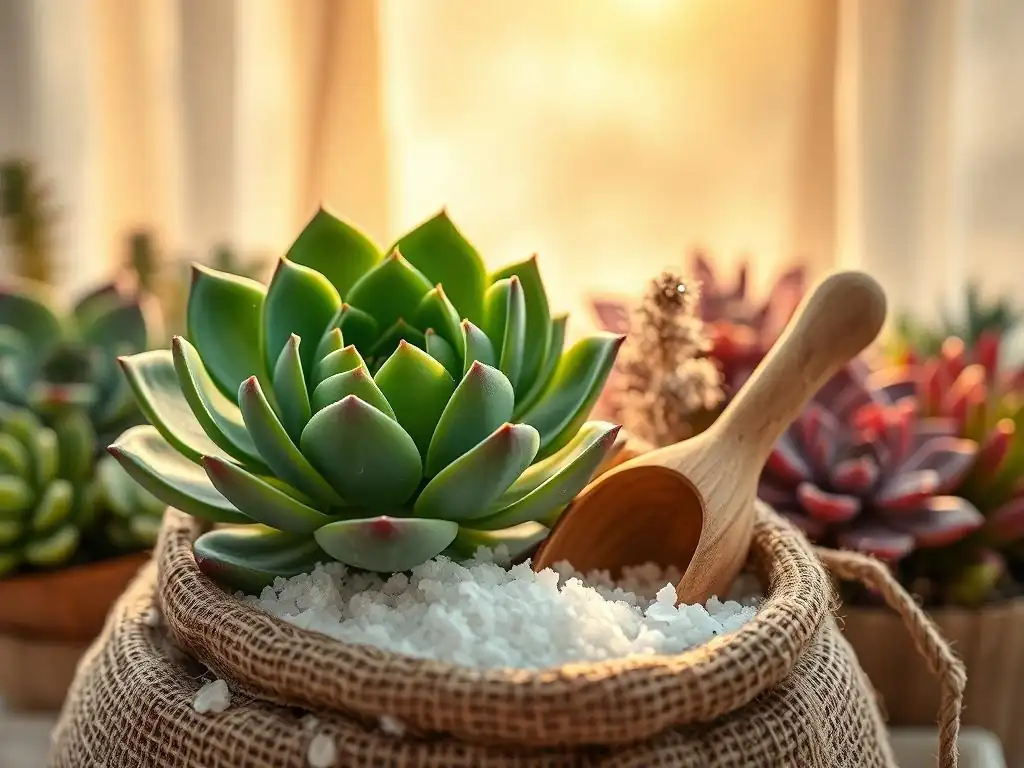
Welcome to SucculentEssentials.org, your gateway to the captivating world of succulents! Are you ready to unlock the secrets to thriving succulents? We delve into the fascinating realm of succulent care, from basic propagation to stunning arrangements. But first, prepare to be amazed: discover the surprising and potentially life-changing effects of Epsom salt benefits for succulents—a simple solution with extraordinary results. Dive in and uncover the secrets to healthier, happier plants!
- Understanding Epsom Salt's Role in Succulent Health
- Applying Epsom Salt to Your Succulents: A Step-by-Step Guide
- Epsom Salt Benefits for Specific Succulent Issues
- Precautions and Considerations When Using Epsom Salt
- Frequently Asked Questions
- Final Reflection: The Unexpected Bloom: Epsom Salts and the Thriving Succulent
- Unleash Your Succulents' Inner Glow!
Understanding Epsom Salt's Role in Succulent Health
Epsom salt, a readily available household item, offers surprising benefits for succulent health, often overlooked by even seasoned succulent enthusiasts. This seemingly simple compound plays a crucial role in addressing a common succulent ailment: magnesium deficiency. While succulents are known for their drought tolerance and low-maintenance nature, neglecting their nutritional needs can lead to stunted growth, discoloration, and even plant death. This article delves into the specific ways Epsom salt, with its rich magnesium content, can revitalize your succulents and promote vibrant growth.
We'll explore the symptoms of magnesium deficiency, the chemical makeup of Epsom salt, and the mechanisms through which magnesium contributes to healthy succulent development, ultimately helping you understand how to leverage this simple solution for optimal succulent care. This guide is essential for anyone aiming to achieve lush, thriving succulents, regardless of experience level. Let's explore the wonders of Epsom salt for your beloved succulents!
Magnesium Deficiency in Succulents: Recognizing the Symptoms
Magnesium deficiency in succulents manifests in several ways, often initially subtle but progressively worsening if left untreated. Early signs include:
- Chlorosis: Yellowing of the leaves, particularly the older, lower leaves, is a classic symptom. This is because magnesium is mobile within the plant, and during deficiency, the plant relocates it from older leaves to support newer growth.
- Necrosis: In advanced stages, yellowing can progress to browning and eventual death of the affected leaves. The leaf margins may become necrotic (brown and dead) first.
- Stunted Growth: The plant's overall growth rate slows significantly as it struggles to produce chlorophyll and carry out essential metabolic processes.
- Leaf Curling or Distortion: Leaves may become curled, twisted, or otherwise misshapen.
- Reduced Flowering: Magnesium is also vital for flowering, so a deficiency can result in fewer or smaller blooms.
It's crucial to distinguish magnesium deficiency from other potential issues like overwatering or pest infestations. Careful observation and a holistic approach to plant care are essential for accurate diagnosis. If you notice several of these symptoms concurrently, a magnesium supplement, such as Epsom salt, may be beneficial.
The Composition of Epsom Salt and its Key Nutrient: Magnesium
Epsom salt, chemically known as magnesium sulfate (MgSO₄), is a naturally occurring mineral compound. Its primary benefit for succulents lies in its high magnesium content. Magnesium is a vital macronutrient, meaning succulents require it in relatively large quantities for healthy growth. It plays a critical role in photosynthesis, the process by which plants convert sunlight into energy.
Without sufficient magnesium, chlorophyll production is hampered, leading directly to the chlorosis observed in deficient succulents. The sulfate (SO₄) component of Epsom salt also offers benefits, contributing to sulfur uptake which is important for various plant functions including protein synthesis. However, the primary benefit derived from Epsom salt for succulents remains the readily available magnesium.
How Magnesium Supports Succulent Growth and Development
Magnesium's role in succulent growth is multifaceted:
- Chlorophyll Synthesis: As mentioned previously, magnesium is a central component of chlorophyll, the green pigment responsible for capturing sunlight during photosynthesis. Adequate magnesium ensures efficient energy production, fueling growth and overall plant health.
- Enzyme Activation: Magnesium acts as a cofactor for numerous enzymes involved in various metabolic processes within the succulent. These enzymes are essential for nutrient uptake, protein synthesis, and other vital functions.
- Nutrient Uptake and Transport: Magnesium facilitates the uptake and transport of other essential nutrients within the plant, ensuring their efficient utilization throughout the succulent. This synergistic effect contributes to overall plant vigor.
- Improved Root Development: Healthy magnesium levels contribute to robust root systems, enabling efficient water and nutrient absorption from the soil. Strong roots are crucial for succulent survival and growth, particularly in arid conditions.
By providing a readily available source of magnesium, Epsom salt helps to address deficiencies and promote robust, healthy succulent growth, resulting in more vibrant and resilient plants. 🌱
Applying Epsom Salt to Your Succulents: A Step-by-Step Guide
This section details the practical application of Epsom salt as a supplemental nutrient source for your succulents. Remember, Epsom salt is a supplement, not a replacement for balanced succulent fertilizer. Overuse can be detrimental, so careful application is key. We'll explore the optimal methods and frequencies to ensure your succulents thrive. Understanding the correct techniques for using Epsom salt benefits succulents significantly.
Preparing the Epsom Salt Solution: Concentration and Dilution
The key to successful Epsom salt application lies in the proper dilution. Using too concentrated a solution can burn your plants' roots, leading to damage and potentially death. A weak solution, however, offers minimal benefits. The ideal concentration is generally a very dilute solution.
A common recommendation is to mix 1 tablespoon of Epsom salt per gallon of water. This creates a solution with a low concentration of magnesium and sulfate, providing a gentle boost to your succulents without overwhelming their delicate root systems. Always use distilled or rainwater to avoid introducing chlorine or other potentially harmful chemicals.
Here's a simple table summarizing different solution strengths and their potential uses:
| Epsom Salt (tablespoons) | Water (gallons) | Concentration | Use Case | Potential Risks |
|---|---|---|---|---|
| 1 | 1 | Low | General feeding, foliar spray, soil drench | Minimal risk if applied correctly |
| 2 | 1 | Medium | Addressing magnesium deficiency (use cautiously) | Risk of root burn if overused |
| >2 | 1 | High | Not recommended for regular use | High risk of root burn and plant damage |
Remember to always start with a weaker solution and observe your plants' response before increasing the concentration. Monitor for any signs of leaf burn or wilting after application.
Different Application Methods: Watering, Foliar Spraying, and Soil Drenching
Epsom salt can be applied to your succulents in several ways, each with its own advantages and disadvantages.
- Watering: This is the most common and simplest method. Simply add the diluted Epsom salt solution to your watering can and water your succulents as you normally would. Ensure the solution reaches the roots. This method provides a gradual release of nutrients.
- Foliar Spraying: This method is particularly useful for quickly addressing magnesium deficiency symptoms, such as yellowing leaves. Fill a spray bottle with the diluted solution and gently mist the leaves, avoiding over-saturation. This allows for direct absorption of magnesium through the leaves.
- Soil Drenching: This method is best suited for addressing magnesium deficiencies in the soil itself. Thoroughly soak the soil with the diluted Epsom salt solution, ensuring even distribution. This approach targets the root zone directly.
Choose the method that best suits your needs and the specific condition of your plants. For routine supplementation, watering is generally sufficient. For visible magnesium deficiency, foliar spraying may be more effective. For soil-based deficiencies, soil drenching might be necessary. Remember to always avoid getting the solution on the leaves when using a soil drench to prevent leaf burn.
Frequency of Epsom Salt Application: Avoiding Over-Fertilization
Over-fertilizing with Epsom salt, like any fertilizer, can harm your succulents. Therefore, moderation is key. The frequency of application depends on several factors, including the type of succulent, the soil composition, and the apparent magnesium levels in your plants.
As a general guideline, applying a diluted Epsom salt solution once a month during the growing season (spring and summer) is usually sufficient. Reduce the frequency to every 6-8 weeks during the dormant season (fall and winter). Always observe your plants for any signs of over-fertilization, such as leaf burn, wilting, or stunted growth.
Remember, Epsom salt is a supplement, not a primary fertilizer. It should be used in conjunction with a balanced succulent fertilizer to ensure your plants receive all the necessary nutrients for optimal health. Regular monitoring and adjusting your application schedule based on your plants' needs will ensure they thrive without the risks associated with over-fertilizing. Careful observation and timely adjustments are crucial for maximizing the Epsom salt benefits for your succulents.
Epsom Salt Benefits for Specific Succulent Issues
Epsom salt, or magnesium sulfate (MgSO₄), offers several surprising benefits for succulents, acting as a readily available source of magnesium and sulfur – two essential nutrients often deficient in typical succulent potting mixes. While not a complete fertilizer, its targeted nutrient delivery addresses specific issues, promoting healthier, more vibrant growth. Understanding how Epsom salt interacts with your succulents is key to maximizing its benefits and avoiding potential problems. Overuse can be detrimental, so always follow recommended application guidelines. Remember that the best approach is preventative care, supplemented with Epsom salt treatments when needed.
Treating Magnesium Deficiency Symptoms with Epsom Salt
Magnesium deficiency manifests in succulents as yellowing between the leaf veins (interveinal chlorosis), often starting with the older, lower leaves. This yellowing contrasts with the green veins, creating a mottled appearance. Severe deficiencies can lead to leaf drop and stunted growth. Epsom salt, a rich source of magnesium, directly addresses this problem.
Several factors contribute to magnesium deficiency in succulents. Poor soil quality, particularly those lacking organic matter, frequently leads to magnesium unavailability. Overwatering can leach magnesium from the soil, exacerbating the problem. Furthermore, some succulent species are more susceptible to magnesium deficiency than others. For example, Echeveria and Sedum species are more prone to showing magnesium deficiency symptoms.
To treat magnesium deficiency, dissolve 1-2 teaspoons of Epsom salt in 1 gallon of water. Water your succulents with this solution every 2-4 weeks, ensuring the solution reaches the roots. Monitor your plants closely for improvement. You should see a gradual return of green color within a few weeks of consistent application. Avoid over-application, as excessive magnesium can interfere with the uptake of other nutrients. Always test the soil pH before and after treatment to ensure it remains within the optimal range for your specific succulent species.
| Symptom | Description | Treatment |
|---|---|---|
| Interveinal Chlorosis | Yellowing between leaf veins | Epsom salt solution (1-2 tsp/gallon) every 2-4 weeks |
| Leaf Drop | Premature loss of leaves | Epsom salt solution, improve drainage |
| Stunted Growth | Slow or inhibited growth | Epsom salt solution, check for other deficiencies |
Improving Succulent Bloom with Epsom Salt Supplements
While primarily known for its magnesium content, Epsom salt also provides sulfur, a crucial element in chlorophyll production and overall plant health. Healthy chlorophyll production is essential for robust flowering. While Epsom salt won't magically induce blooms in non-blooming species, it can significantly enhance flowering in those already prone to bloom. This enhancement is particularly noticeable in species known for their prolific blooms. For instance, Kalanchoe species often benefit from Epsom salt supplements during the blooming period.
Supplementing with Epsom salt during the succulent's active growing season (spring and summer) can promote more abundant and vibrant blooms. The increased magnesium and sulfur levels contribute to stronger stems, leading to better support for flower stalks and more robust flower production. However, it's crucial to remember that proper lighting, watering, and overall plant health are paramount for successful blooming. Epsom salt acts as a supportive element, not a miracle cure. Using a diluted Epsom salt solution (1 teaspoon per gallon of water) as a foliar spray during the budding phase can also enhance bloom development.
Epsom Salt for Enhancing Root Health and Preventing Root Rot
Healthy roots are fundamental to a succulent's survival and overall health. Epsom salt can play a role in improving root health and, indirectly, preventing root rot. While it doesn't directly combat root rot pathogens, its contribution to overall plant vigor makes succulents more resilient to root problems. Stronger, healthier roots are better equipped to absorb water and nutrients efficiently, reducing the risk of overwatering – a primary cause of root rot.
The magnesium in Epsom salt helps improve the cell structure of the roots, promoting stronger root growth and better nutrient uptake. This improved nutrient uptake translates to a more robust plant, less susceptible to diseases. However, it's vital to remember that proper drainage and watering practices remain crucial in preventing root rot. Epsom salt is a supportive measure, not a replacement for good horticultural practices.
Always ensure your succulents are planted in well-draining soil and avoid overwatering. Using a diluted Epsom salt solution (1/2 teaspoon per gallon) during planting can help establish strong root systems, providing a healthy start for your succulents. Remember to allow the soil to dry completely between waterings to minimize the risk of root rot.
Precautions and Considerations When Using Epsom Salt
While Epsom salt offers several benefits for succulents, it's crucial to use it judiciously. Improper application can lead to negative consequences, negating any potential advantages. Understanding the potential risks and knowing which succulents respond best to Epsom salt treatment is key to successful application. Remember, moderation is the cornerstone of healthy succulent care, and this principle applies equally to Epsom salt usage. The goal is to supplement, not overwhelm, the plant's nutrient uptake.
Potential Risks of Over-Application: Salt Burn and Other Issues
Over-application of Epsom salt is a significant concern. Too much magnesium and sulfate can lead to salt burn, a condition where the salts accumulate in the soil, drawing water away from the succulent's roots. This dehydration causes the leaves to shrivel, brown, and potentially die. The symptoms of salt burn might initially mimic underwatering, making diagnosis tricky. However, a closer examination will reveal the characteristic browning and crisping of the leaf edges and tips. The soil itself might appear excessively white or crusty due to the salt deposits.
To avoid salt burn, always adhere to the recommended dilution ratios. Start with a weaker solution than suggested and observe your succulents closely for any adverse reactions. If you notice signs of salt burn, immediately flush the soil with plenty of clean water to help leach out the excess salts. Prevention is always better than cure; regular soil testing can help you monitor salt levels and adjust your fertilization strategy accordingly. Remember, healthy succulents thrive in well-draining soil that avoids salt buildup.
Identifying Suitable Succulents for Epsom Salt Treatment
Not all succulents react equally to Epsom salt treatments. Some species might benefit more than others, while some might be completely unaffected or even negatively impacted. While further research is needed to definitively determine which succulents respond best, anecdotal evidence suggests that certain types, particularly those exhibiting magnesium deficiencies (indicated by yellowing leaves or stunted growth), show positive responses. These deficiencies are often more prominent in succulents grown in containers with limited soil volume.
For example, certain Echeveria varieties may show improved growth and vibrancy with Epsom salt applications. However, other succulents, especially those already growing vigorously, may not benefit significantly and could even suffer from over-fertilization. Always start with a small-scale test on a single plant before applying it to your entire collection.
Careful observation is key to understanding how your specific succulents respond. Documenting your findings, including the type of succulent, the concentration of the Epsom salt solution, and the plant's reaction, will help refine your approach over time. This careful monitoring ensures you’re providing optimal care, tailored to the unique needs of your succulent collection.
Combining Epsom Salt with Other Fertilizers and Nutrients
While Epsom salt can provide a supplemental boost of magnesium and sulfate, it shouldn't replace a balanced succulent fertilizer. Combining Epsom salt with other fertilizers requires careful consideration to avoid nutrient imbalances. Too much of any single nutrient can hinder the uptake of others, leading to deficiencies elsewhere. It's crucial to understand the nutrient composition of your chosen fertilizer before incorporating Epsom salt.
For instance, if your fertilizer already contains a high concentration of magnesium, adding Epsom salt might lead to magnesium toxicity. Similarly, combining Epsom salt with fertilizers containing high levels of sulfate could also lead to negative consequences. Ideally, opt for a balanced, slow-release succulent fertilizer that provides a complete range of essential nutrients.
Use Epsom salt as a supplement to address any specific deficiencies, rather than a primary source of nutrients. Always follow the instructions on both the fertilizer and Epsom salt packaging, and remember that less is often more when it comes to fertilizing succulents. Careful monitoring and observation are critical for success.
Frequently Asked Questions
What are the benefits of using Epsom salt on succulents?
Epsom salt provides magnesium and sulfate, essential nutrients that can improve succulent growth and health. It can help address deficiencies leading to improved leaf color and overall plant vigor.
How often should I use Epsom salt on my succulents?
Use Epsom salt sparingly, only when a magnesium or sulfate deficiency is suspected. A treatment every 2-3 months is usually sufficient; overuse can be harmful.
How do I apply Epsom salt to my succulents?
Dissolve 1 teaspoon of Epsom salt per gallon of water. Water your succulents with this solution, ensuring the soil is thoroughly moistened. Avoid getting the salt directly on the leaves.
What are the signs of magnesium or sulfate deficiency in succulents?
Look for yellowing between the leaf veins (chlorosis), stunted growth, and pale or discolored foliage. These are indicative of potential nutrient deficiencies.
Are there any risks associated with using Epsom salt on succulents?
Yes, overuse can lead to salt buildup in the soil, harming your succulents. Always dilute the Epsom salt properly and avoid frequent applications. Proper watering techniques are crucial to prevent issues.
Final Reflection: The Unexpected Bloom: Epsom Salts and the Thriving Succulent
The revitalizing power of Epsom salts for succulents is not merely a gardening trick; it's a testament to the interconnectedness of nature and the surprising solutions found in simple, readily available resources. This article has explored the multifaceted benefits of Epsom salts, from enhancing nutrient uptake to improving soil drainage and combating common succulent ailments. The ease of application and the dramatic results make this a truly accessible method for any plant enthusiast.
The impact of this simple solution extends beyond the individual plant; it speaks to a broader appreciation for sustainable and natural gardening practices. We are increasingly aware of the importance of environmentally friendly approaches, and utilizing Epsom salts offers a low-impact, highly effective alternative to harsh chemical fertilizers. This resonates deeply with my own gardening philosophy, emphasizing a harmonious relationship between plant and caregiver. The glory of gardening: hands in the dirt, head in the sun, heart with nature. To nurture a garden is to feed not just the body, but the soul.
This quote perfectly captures the essence of nurturing succulents with Epsom salts—it's a mindful act that connects us to the natural world.
Now, consider your own succulent collection. Are your plants thriving or struggling? Take a moment to reflect on the information presented and consider incorporating Epsom salts into your routine. Observe the changes in your plants' health and vigor. Remember, even the smallest act of care can yield remarkable results, transforming a seemingly simple act into a rewarding journey of growth and discovery. Embrace the unexpected bloom, and watch your succulents flourish.
Unleash Your Succulents' Inner Glow!
Thank you for exploring the amazing world of Epsom salts and their surprising benefits for your succulents! We hope you've gained valuable insights into nurturing healthier, happier plants. Now it's time to put your knowledge into action!
- Give your succulents an Epsom salt soak: This is the most effective way to see a difference! Follow the instructions in the article for optimal results and observe the changes in your plants over the next few weeks.
- Share your success: Show off your thriving plants on social media using #EpsomSaltSucculents and tag @SucculentEssentials – let's inspire each other!
- Experiment with different concentrations: Try varying the solution strength (always following safe dilution practices) to see what works best for your specific plants. Keep a record of your observations for future reference.
Ready to see your succulents flourish like never before? What unique benefits have you observed from using Epsom salts with your plants?