
Advanced Succulent Science and Research
Dive deep into the science of succulents with cutting-edge research on Crassulacean Acid Metabolism (CAM), drought physiology, and genetic hybridization. Explore how these resilient plants adapt to extreme environments, from desert ecology to greenhouse habitat replication, and discover breakthroughs in pest resistance and sustainable cultivation. This is your hub for advanced succulent science, blending botany, innovation, and environmental insight for serious growers and researchers.
 Advanced Pest and Disease Resistance
 Genetic Studies and Hybridization
 Drought Adaptations and Physiology
 Desert Ecology and Environmental Interactions
 Innovations in Succulent Research
 Habitat Replication in Greenhouses
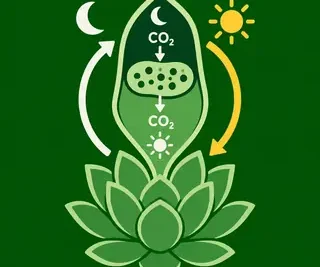 Crassulacean Acid Metabolism (CAM) in Depth
Advanced Succulent Science and Research
Welcome to the scientific frontier of succulent study. Here, we move beyond basic watering schedules to explore the remarkable biology, ecology, and innovation behind these drought-defying plants. Whether you're a seasoned collector, a botanist-in-training, or a curious hobbyist, this category offers peer-reviewed insights, practical applications for greenhouse enthusiasts, and the latest breakthroughs in genetic research. Discover how understanding CAM photosynthesis, desert dynamics, and hybridization can transform your approach to growing and conserving succulents.
🌵 Crassulacean Acid Metabolism (CAM) in Depth
Dive into the fascinating biochemical loop that lets succulents thrive on minimal water. CAM photosynthesis reverses the typical day/night gas exchange: stomata open at night to absorb CO₂, storing it as malic acid, then close during the day to prevent water loss. Learn how to measure this cycle in your own plants, understand the role of enzymes like PEP carboxylase, and see why temperature swings matter more than watering frequency. This knowledge directly improves your irrigation timing and light exposure decisions.
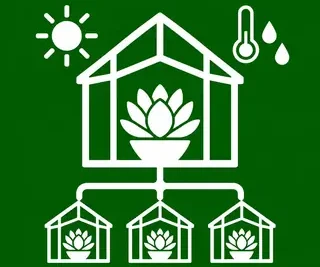
🏜️ Habitat Replication in Greenhouses
Transform your indoor or backyard greenhouse into a micro-biome that mimics the Sonoran Desert or Madagascan spiny forest. This subcategory covers substrate engineering—using pumice, decomposed granite, and calcined clay—to replicate the sharp drainage of natural habitats. Explore climate controls: day/night temperature differentials, humidity cycling, and seasonal drought pauses. You’ll also learn about light intensity mapping and airflow management to prevent fungal issues while encouraging authentic growth forms and flowering triggers.
🔬 Innovations in Succulent Research
Stay ahead of the curve with cutting-edge studies on tissue culture micropropagation, cryopreservation of rare species, and vertical farming adaptations for arid plants. Researchers are now using CRISPR to enhance drought tolerance, while 3D-printed sensors monitor root zone moisture in real time. This section reviews recent peer-reviewed papers, university collaborations, and citizen-science projects. Expect practical takeaways, such as using light spectra to shorten juvenile stages or employing air-rooting techniques inspired by laboratory findings.
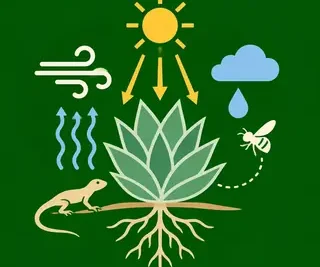
🦎 Desert Ecology and Environmental Interactions
Succulents don’t exist in isolation; they form complex relationships with pollinators, mycorrhizal fungi, and rock crevice microclimates. Understand how birds, bats, and nocturnal moths co-evolved with night-blooming cacti, and how seed dispersal depends on specific animal gut microbes. We also examine climate change impacts—rising nighttime temperatures disrupt CAM cycles, while altered rainfall patterns affect seed bank viability. Use this ecological lens to design companion plantings that boost biodiversity and resilience in your own garden.
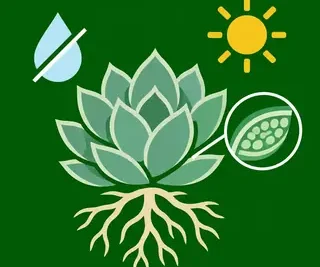
💧 Drought Adaptations and Physiology
Beyond CAM, succulents employ a symphony of physical and chemical defenses: waxy cuticles, reflective trichomes, root contraction to escape heat, and mucilage that holds water in cells. This subcategory explores turgor pressure regulation, osmoregulation via proline and sugars, and the role of aquaporins in rapid rehydration after rain. Learn how to diagnose stress signals like leaf wrinkling or window discoloration, and how to adjust your care to mimic natural wet-dry cycles for optimal root health and storage organ development.
🧬 Genetic Studies and Hybridization
From hobbyist crossings to tissue-culture tetraploids, this is the breeding ground for novel colors, shapes, and hardiness. Understand the basics of dominant vs. recessive traits in Echeveria and Haworthia, pollen storage techniques, and how to use flow cytometry to verify ploidy levels. Explore DNA barcoding to identify cryptic species and the rise of genome-wide association studies (GWAS) for disease resistance. We provide step-by-step guides for hand-pollination, seed sterilization, and selecting for compact growth under indoor LED lighting.
🛡️ Advanced Pest and Disease Resistance
Move past neem oil sprays and into integrated pest management (IPM) tailored to succulents. Learn about breeding for thinner, tougher cuticles that deter scale and mealybugs, and the use of beneficial nematodes for root weevils. We discuss systemic resistances—like alkaloid production—and how to induce systemic acquired resistance (SAR) with seaweed extracts or salicylic acid. Also covered: early detection of Fusarium and Erwinia using moisture probes and visual stress indices, plus quarantine protocols for newly acquired rare plants.
Frequently Asked Questions
What is the most important factor in replicating a desert habitat for succulents?
Drainage is paramount, but temperature swing matters just as much. Desert soils dry quickly, yet night temperatures drop 10–15°C, triggering CAM acidification. In greenhouses, use porous substrates (70% inorganic) and program cooling fans at night. Avoid constant humidity above 60%, which encourages rot. Monitor root zone moisture with probes, not calendar schedules. Mimic winter drought periods for 6–8 weeks to synchronize natural dormancy and promote flowering.
Can I practice CAM photosynthesis measurement at home without expensive equipment?
Yes, a simple pH test works. In the evening, collect leaf sap and test pH (typically acidic, ~5.0); in the morning, pH rises above 6.5 as malic acid is converted. Alternatively, use a portable CO₂ sensor in a sealed bag: nighttime CO₂ uptake indicates active CAM. These rough checks help you adjust watering and light—if morning pH doesn’t rise, your plant may be stressed or overwatered. For precise measurements, a refractometer measures malate concentration.
How does hybridization improve pest resistance naturally?
Hybrids often inherit thicker cuticles or elevated resin production from wild parents, creating physical and chemical barriers. For example, crossing Echeveria with Graptopetalum yields denser leaf rosettes that reduce pest access. Genetic diversity also confuses pests looking for specific host cues. By selecting parents with known resistance—e.g., to spider mites—you stack protective traits. Always test new hybrids under pest pressure before commercial release, and keep sterile breeding records.
What are the first signs that a succulent is failing due to overwatering vs. underwatering?
Overwatering shows translucent, mushy leaves that fall off easily, often with dark spots at the base. Underwatering causes wrinkled, shriveled leaves that feel deflated but remain firm. A moisture meter helps: overwatered soil stays wet >2 days after watering; underwatered soil is bone-dry and pulls away from pot edges. Check roots—overwatered roots are brown and slimy, while underwatered roots are white but brittle. Adjust watering frequency based on leaf turgor, not calendar days.
How can I use genetic research to create a more drought-tolerant succulent hybrid?
Focus on selecting parents with high root-to-shoot ratios and small leaf surface areas. Look for wild species from ultra-arid zones, like Ariocarpus, which have slow growth but extreme CAM efficiency. Use molecular markers linked to aquaporin genes to screen seedlings early. Cross with faster-growing Echeveria for vigor, then backcross to the drought-tolerant parent for two generations. Test offspring under water deficit trials, measuring biomass loss and recovery after rehydration.