Unlocking the Secrets of Succulent Genetics and Hybridization
Welcome to the cutting-edge frontier of succulent science. At SucculentEssentials.org, our Genetic Studies and Hybridization subcategory dives deep into the DNA, breeding techniques, and evolutionary marvels of these drought-resistant plants. Whether you're a curious hobbyist or a serious collector, this resource empowers you to understand how new cultivars emerge, why certain traits appear, and how to create your own stunning hybrids. Explore the intersection of botany and artistry, where science meets passion for the most resilient plants on Earth.
🌱 Fundamentals of Succulent Genetics
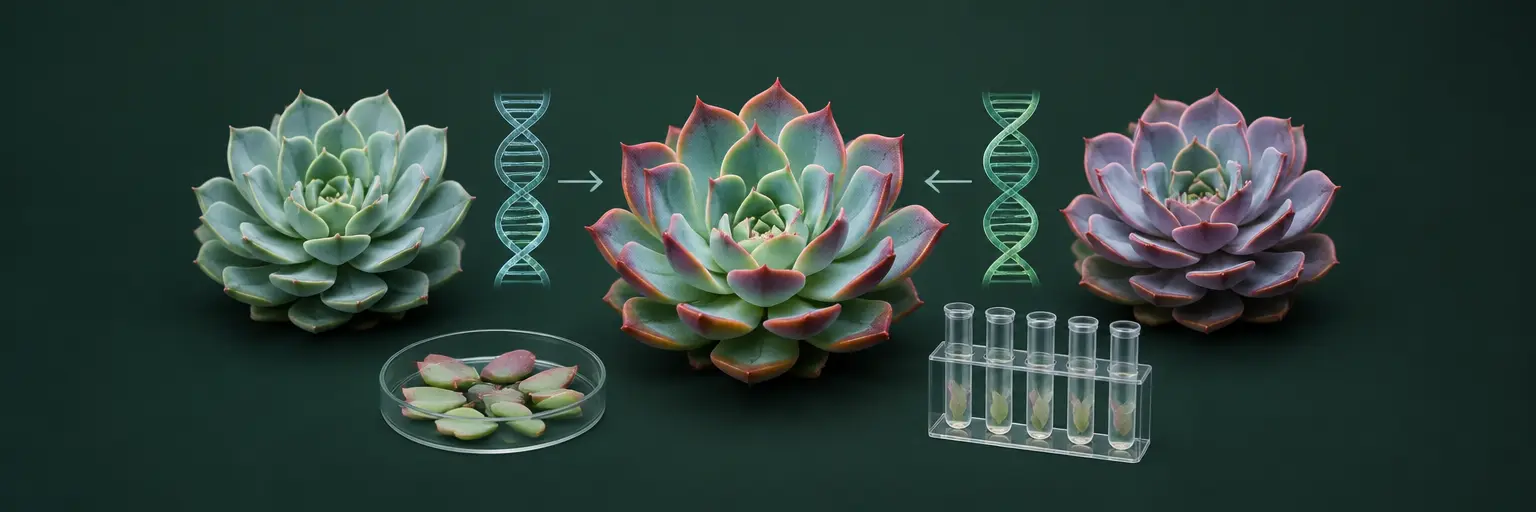
Understanding the basics of succulent genetics is your first step toward mastery. Here, we break down chromosome structures, dominant and recessive traits, and the role of polyploidy in producing larger, more vibrant blooms. You'll learn how environmental stress—like drought or intense sunlight—triggers epigenetic changes that affect coloration and leaf morphology, without altering the DNA sequence itself. This knowledge helps you predict offspring traits when cross-pollinating species, turning guesswork into a science.
Expect detailed guides on genetic markers used to identify parentage, plus practical tips on preserving rare gene pools. We also explain why some hybrids are sterile and how tissue culture can rescue coveted genetics. By demystifying terms like "F1 hybrid" and "backcrossing," you'll navigate nursery catalogs with confidence and appreciate the complex lineage behind your favorite echeverias or lithops. This foundation is essential for anyone aiming to breed successfully.
🔬 Advanced Hybridization Techniques
Ready to play botanist? Our advanced hybridization section offers step-by-step protocols for hand-pollinating succulents, from selecting compatible parents to isolating flowers to prevent unwanted pollen drift. You'll discover the art of emasculation—removing anthers to control fertilization—and how to use fine brushes or bees as pollinators. We emphasize hybrid vigor (heterosis) to create plants with superior growth rates, disease resistance, and striking aesthetics, such as variegated leaves or ruffled edges.
Beyond basics, we explore interspecific and intergeneric crosses, including dramatic examples like ×Pachyveria (Pachyphytum × Echeveria). Learn to manage pollination timing, collect and store pollen, and sow seeds under sterile conditions for maximum germination. We also cover cold-stratification and light-dependent germination cues specific to succulent seeds. Each technique is illustrated with real-world case studies, ensuring you can replicate results at home or in a professional greenhouse.
🧬 Molecular Tools for Genetic Analysis
Modern succulent science has embraced molecular biology. This section introduces you to PCR (Polymerase Chain Reaction) and DNA barcoding—techniques that allow precise identification of species and hybrids, even when morphological traits are ambiguous. You'll learn how to extract DNA from succulent leaves, interpret gel electrophoresis results, and use online databases like NCBI to compare sequences. This is invaluable for verifying the authenticity of rare imports or resolving taxonomic debates among look-alike species like Haworthia and Haworthiopsis.
We also discuss CRISPR-Cas9 gene editing, a futuristic tool that could modify traits like frost tolerance or flower color. Ethical considerations are addressed upfront, emphasizing responsible use within the succulent community. Additionally, discover how genotyping-by-sequencing (GBS) maps entire genomes, uncovering the evolutionary history of desert survivors. These molecular insights transform your appreciation from surface beauty to a deeper understanding of adaptation and resilience.
🌵 Breeding Programs & Cultivar Development
Professional breeders and hobbyists alike will benefit from our guides to structured breeding programs. We outline how to define breeding goals—whether for compact growth, unusual patterns, or fragrant flowers—and how to maintain meticulous pedigree records. Learn the line-breeding versus outcrossing strategies, and how to stabilize recessive traits over several generations. You'll see examples of famous cultivars like 'Black Prince' echeveria and 'Moonstone' pachyphytum, tracing their genetic journeys.
We also cover intellectual property basics, including plant patents and trademarks, so you can legally protect your creations. Understand how to phenotype and genotype off spring for consistency, and use selection indices to cull inferior plants. Practical advice on greenhouse management, pollen storage (-80°C), and controlled pollination cages ensures your program runs smoothly. Whether you dream of selling hybrids or simply impressing friends, this section turns ambition into achievable milestones.
📊 Data & Citizen Science in Succulent Genetics
Not a lab scientist? You can still contribute! This section highlights citizen science projects where enthusiasts record phenotypic traits—flowering times, leaf colors, drought responses—to help researchers map genetic diversity. Platforms like iNaturalist and specially designed apps allow you to upload observations that feed global databases. We explain how your garden becomes a living laboratory, and how simple crosses you make can provide valuable data on inheritance patterns.
We also delve into quantitative genetics, using statistics to estimate heritability of traits like stem length or pubescence. Learn to use basic spreadsheets for ANOVA tests or simple regression analysis, interpreting results to make informed breeding decisions. Additionally, we feature interviews with leading succulent geneticists and breeders, offering insights into their workflows and future trends. By participating, you join a community pushing the boundaries of what succulents can be.
Frequently Asked Questions
What is the easiest succulent to hybridize for beginners?
Echeveria and Sedum species are excellent starting points due to their simple flower structures and high cross-compatibility. They produce fertile seeds readily, and offspring often show visible variations in rosette size and leaf color. Start with Echeveria elegans or Sedum morganianum, following our hand-pollination guide, for rewarding early results.
How long does it take to grow a new succulent hybrid from seed?
Typically, from pollination to mature flowering plant takes 12 to 24 months, depending on species and growing conditions. Some fast growers like Graptopetalum may flower within a year, while slow-growing Ariocarpus require several years. Patience is key—use supplemental lighting and well-draining soil to accelerate growth.
Can I cross different succulent genera, like Echeveria and Sempervivum?
Yes, but success varies. Intergeneric hybrids such as ×Graptoveria (Graptopetalum × Echeveria) are common. However, distantly related genera like Lithops and Haworthia rarely produce viable offspring. We recommend consulting genetic similarity charts we provide, and trying multiple attempts with fresh pollen for improved chances.
Are hybrid succulents more susceptible to pests or diseases?
Not inherently, but some hybrids may have reduced genetic diversity, making them slightly less adaptable to extreme stress. However, hybrid vigor often provides increased resilience. To minimize risk, focus on robust parent strains and maintain quarantine for new plants. Good cultural practices—proper airflow, watering, and soil—are always your best defense.
Do I need expensive lab equipment to study succulent genetics at home?
No. Many observations—flower color, leaf shape, growth rate—require only your eyes and a notebook. For DNA analysis, affordable kits and smartphone-based imaging are emerging. You can also send samples to commercial labs for sequencing. Start with phenotype tracking; it’s free and scientifically valuable.