CAM and Succulent Biodiversity: The Role of Metabolism in Ecosystems
😊 Discover how CAM photosynthesis fuels succulent biodiversity! This article explores the crucial role of this unique metabolic pathway in shaping succulent…
Read article
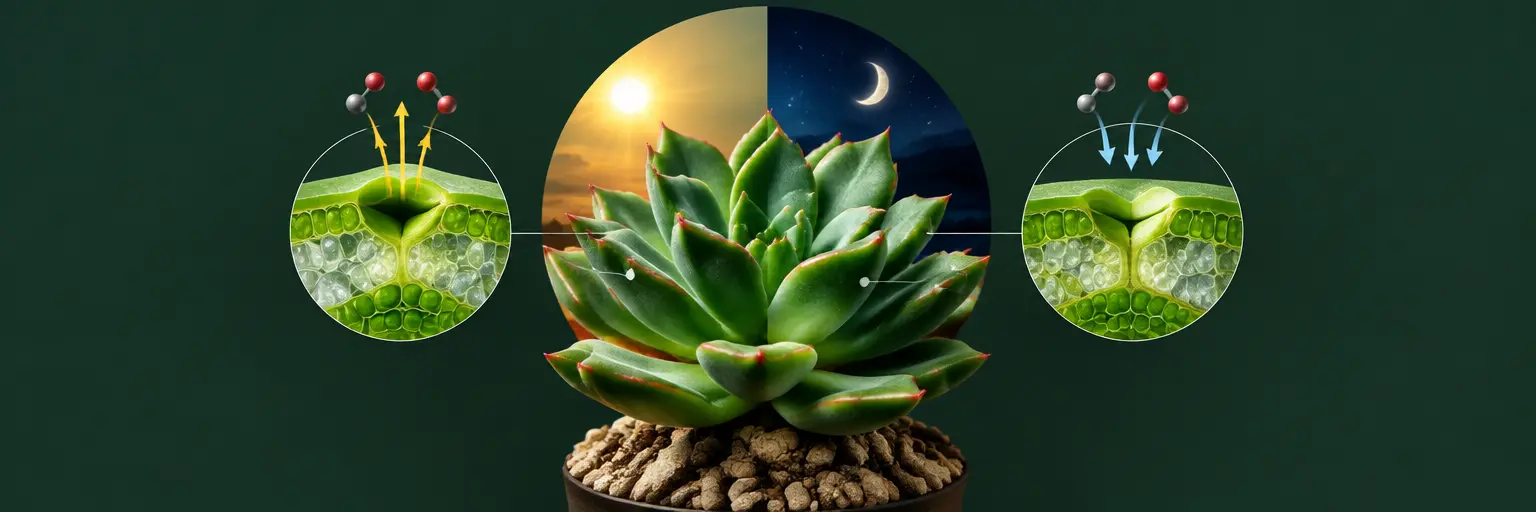
Dive deep into the fascinating world of Crassulacean Acid Metabolism with this specialized exploration of advanced succulent science. Here, we unravel the incredible biochemical adaptations that allow succulents to thrive in极端干旱 conditions, turning CO₂ absorption into a nighttime ritual to conserve precious water. This isn’t just basic care—it’s a closer look at the physiological genius behind every resilient leaf and stem. Perfect for dedicated collectors and curious botanists alike, this content bridges the gap between hobbyist enthusiasm and scientific insight, showing you how CAM photosynthesis powers survival, growth, and vibrant health in your favorite plants. Whether you’re optimizing watering schedules or understanding tissue acidity shifts, you’ll gain a deeper appreciation for the silent, nocturnal machinery that keeps succulents alive. Unlock the secrets of stomatal behavior, malic acid storage, and the precise environmental triggers that signal your plants to switch into conservation mode—making this an essential read for anyone serious about succulent mastery.
😊 Discover how CAM photosynthesis fuels succulent biodiversity! This article explores the crucial role of this unique metabolic pathway in shaping succulent…
Read article
🤔 Unlock the secrets to successful succulent care! Our "CAM and Succulent Dormancy: The Role of Metabolism in Seasonal Rest" article provides…
Read article
🤔 Discover the hidden dangers! SucculentEssentials.org explores the toxicity levels of various succulent plants, helping you ensure the safety of your family…
Read article
🤔 Discover how temperature dramatically impacts your succulents' survival! Succulent heat tolerance explained: Learn crucial strategies to protect your prized plants from…
Read articleDive into the fascinating biochemical world of Crassulacean Acid Metabolism (CAM), the evolutionary superpower that lets succulents thrive in arid conditions. This advanced guide unpacks the science behind nighttime carbon fixation, stomatal behavior, and water-use efficiency. Whether you are a seasoned collector or a curious researcher, this section provides deep insights into how CAM photosynthesis works, its variations across species, and practical implications for cultivation, light management, and watering schedules.
CAM plants open their stomata at night to absorb carbon dioxide, converting it into malic acid stored in vacuoles. This clever timing reduces water loss by up to 90% compared to C3 plants. During the day, stomata stay closed, and the stored malate is decarboxylated to release CO₂ for the Calvin cycle. This temporal separation is the core of CAM’s efficiency.
For succulent growers, this means watering at dawn or dusk aligns better with the plant’s natural metabolic rhythm. Observing a slight acidification of leaf sap in the morning is a sign of active CAM. Understanding this cycle helps you diagnose stress, optimize fertigation, and appreciate why overwatering disrupts the delicate pH balance essential for CAM function.
Not all succulents are equal CAM performers. Obligate CAM species like most cacti and agaves rely solely on this pathway, while facultative CAM plants (e.g., certain Sedum and Portulacaria) switch between C3 and CAM based on water availability. There are also weak CAM plants that use the pathway only under severe drought stress.
Knowing your plant’s type helps tailor irrigation and light exposure. Facultative CAM species can tolerate more frequent watering without metabolic disruption, but obligate CAM plants may suffer root rot if kept constantly moist. Research wild hybrids and cultivars to predict their flexibility, and use this knowledge to recreate their native microclimates—mimicking seasonal dry periods enhances CAM upregulation.
At the molecular level, CAM relies on phosphoenolpyruvate carboxylase (PEPCase) for nighttime CO₂ fixation, forming oxaloacetate and then malate. Daytime decarboxylation is catalyzed by malic enzyme or PEP carboxykinase, releasing CO₂ for RuBisCO. This enzymatic dance involves tight regulation of vacuolar transporters and cytosolic pH.
Advanced growers can measure malate content with test strips or pH probes to gauge metabolic activity. High morning acidity indicates healthy CAM, while afternoon alkalinity shows successful decarboxylation. Supplementing with potassium and magnesium supports enzyme function, while excessive nitrogen can inhibit PEPCase. This knowledge is critical for optimizing growth rates and flowering in high-value specimens.
CAM plants exhibit the highest water-use efficiency (WUE) among photosynthetic pathways, often fixing 1 gram of CO₂ per 50-100 grams of water transpired—versus 400-900 grams in C3 plants. This efficiency allows succulents to survive months without rain, relying on stored water in leaves, stems, or roots. Their thick cuticles and sunken stomata further reduce evapotranspiration.
For horticulturists, this means avoiding frequent shallow watering that encourages weak root development. Instead, water deeply but infrequently, allowing the substrate to fully dry. Periods of mild water stress (30-50% of field capacity) stimulate CAM activity and enhance stress resilience. However, prolonged drought beyond the plant’s storage capacity can lead to irreversible tissue damage—monitor turgor pressure and leaf wrinkling.
CAM induction is influenced by photoperiod, light intensity, temperature fluctuations, and atmospheric CO₂ concentration. High light promotes malate accumulation, while cool nights (10-15°C) enhance PEPCase activity. Conversely, extremely hot nights (>25°C) can suppress CAM, causing stomata to open during the day—defeating the purpose.
In cultivation, artificial lighting should mimic dawn/dusk spectra to avoid disrupting circadian rhythms. Use LED grow lights with a 12-14 hour photoperiod and maintain a nighttime temperature drop of 8-10°C for optimal CAM. Elevated CO₂ levels (e.g., in greenhouse enrichment) can boost yield but may reduce the need for night uptake—balance is key for consistent growth.
Measure leaf acidity in the early morning using pH paper—freshly crushed leaf sap should be acidic (pH 4-5). Also, observe stomata under a microscope at night: they open, while daytime closure is visible. Species like Agave, Echeveria, and Kalanchoe are typical CAM, whereas many Mesembs show weak CAM.
Yes, CAM plants tolerate low light better than many C3 species because they can accumulate malate under low irradiance. However, very dark conditions slow growth and may cause etiolation. Provide at least 200-400 µmol/m²/s of light for healthy CAM activity, and reduce water to match lower photosynthetic rates.
No, watering at night is actually beneficial—it coincides with stomatal opening, allowing roots to take up water while minimizing evaporation. Avoid water on leaves during the day, as it can cause sunscald or fungal issues. Morning watering is fine if foliage stays dry, but night irrigation enhances metabolic efficiency.
Overwatering, constant warm nights, and excessive nitrogen fertilization can downregulate CAM enzymes. Also, prolonged darkness or irregular photoperiods disrupt circadian rhythms. To restore CAM, reduce watering frequency, lower night temperatures, and switch to a balanced fertilizer low in ammonium.
Yes, many intergeneric hybrids (e.g., xGraptoveria) exhibit intermediate CAM-C3 behavior. These plants adapt their pathway based on moisture stress. For example, young leaves may use C3, while older leaves shift to CAM during drought. This genetic flexibility makes them ideal for experimental breeding and landscape use.