
Maximize Your Profits: The Smart Way to Price Your Digital Succulent Products


Welcome to SucculentEssentials.org, where the thriving world of succulents meets savvy entrepreneurship! Are you ready to unlock the secrets to maximizing your profits in the exciting market of digital succulent products? Discover the smart strategies and pricing techniques that will transform your passion into a flourishing business. Dive in and learn how to price your digital succulent creations for unparalleled success – your journey to a profitable succulent empire starts here!
- Understanding Your Market
- Defining Your Value Proposition
- Pricing Strategies
- Testing and Optimizing Pricing
- Maximizing Revenue
- Case Studies: Successful Pricing Strategies
- Tools and Resources
-
Frequently Asked Questions
- How do I determine the price of my digital succulent products?
- What factors influence the price of digital succulent products?
- Can I offer different pricing tiers for my digital succulent products?
- Where can I sell my digital succulent products?
- How can I ensure my digital succulent products are priced competitively yet profitably?
- Final Reflection: The Enduring Bloom of Profitable Pricing
- Unlock Your Succulent Empire: Price for Profit!
Understanding Your Market

Creating and selling digital succulent products – ebooks brimming with propagation tips, online courses teaching terrarium construction, or exclusive membership communities offering expert advice – presents a fantastic opportunity to monetize your succulent passion. But maximizing your profits requires a shrewd approach to pricing. This guide will walk you through a strategic pricing model, helping you determine the ideal price point that balances profitability with market demand and the perceived value of your digital offerings.
We'll explore crucial steps like analyzing competitor pricing, identifying your target audience, and conducting thorough market research to pinpoint the precise value of your unique succulent expertise. This isn't just about slapping a price tag on your hard work; it's about building a sustainable and thriving business around your love of succulents. Let's delve into the details to ensure you're maximizing your earnings potential.
Analyzing Competitor Pricing
Before setting your prices, it's vital to understand the current market landscape. Analyzing your competitors' pricing strategies provides invaluable insight. This isn't about copying; it's about learning. Consider these factors:
- Product Type: Are you selling ebooks, online courses, or memberships? Each product type commands a different price range. Ebooks generally have lower price points than comprehensive courses, while memberships often offer tiered pricing based on access levels.
- Content Volume and Quality: A detailed, comprehensive ebook with high-quality images will naturally command a higher price than a shorter, less polished offering. Similarly, courses with extensive video tutorials, downloadable resources, and personalized feedback justify higher prices.
- Competitor's Brand Reputation: Established brands with a strong reputation for quality and expertise can often charge premium prices. New entrants may need to start with lower prices to build credibility.
- Pricing Strategies: Are competitors using value-based pricing, cost-plus pricing, or competitive pricing? Observing their strategies reveals what resonates with the market.
By systematically analyzing these aspects for several competitors, you can build a realistic picture of the current pricing norms and identify potential opportunities for differentiation. Remember to document your findings in a spreadsheet for easy comparison.
Identifying Your Target Audience
Understanding your ideal customer is paramount to successful pricing. Who are you selling to? Are they beginner succulent enthusiasts looking for affordable introductory guides, or experienced collectors willing to invest in premium, specialized content?
Consider these key characteristics of your target audience:
- Budget: What's their disposable income? Are they price-sensitive, or are they willing to pay a premium for high-quality content?
- Knowledge Level: Are they beginners or experts? Beginners may be less willing to pay high prices, while experts may be more receptive to premium offerings.
- Needs and Wants: What are their specific needs and desires? What problems are they trying to solve with your product? This understanding helps you justify a higher price point if you offer unique solutions.
- Demographics: Age, location, and other demographic factors can influence purchasing behavior and price sensitivity.
A clear understanding of your target audience's characteristics will directly inform your pricing decisions. This detailed customer profile will be invaluable throughout your business development.
Market Research: Pinpointing Value
Effective market research is crucial for determining the perceived value of your digital succulent products. This goes beyond simply looking at competitor prices; it involves understanding what your target audience is willing to pay for the specific value you offer.
Consider these research methods:
- Surveys: Conduct surveys to directly ask your target audience about their willingness to pay for different price points.
- Focus Groups: Organize focus groups to gather qualitative feedback and understand their perception of your product's value.
- A/B Testing: Experiment with different price points to see which yields the best conversion rates.
- Pre-orders: Offer pre-orders at different price points to gauge market demand and adjust pricing accordingly.
By combining these research methods, you can gain a comprehensive understanding of your target market's perceived value for your digital succulent products, ultimately leading to more effective pricing strategies and maximized profits. Remember, pricing is a dynamic process; regularly review and adjust your pricing based on market feedback and sales data.
Defining Your Value Proposition
Pricing your digital succulent products effectively hinges on understanding your value proposition. This isn't just about the what you're selling (e.g., an ebook on propagating succulents), but the why someone should buy it from you. What unique benefits do you offer that justify a specific price point? A strong value proposition is the cornerstone of successful pricing. It answers the crucial question: "Why should someone pay for this, rather than finding free information online?"
Highlighting Unique Selling Points (USPs)
Identifying your Unique Selling Points (USPs) is paramount. What sets your digital succulent products apart from the competition? Are you offering:
- Exclusive content: Rare propagation techniques? Access to a specific succulent cultivar's secrets? A detailed guide to creating a specific type of arrangement not found elsewhere?
- Expert insights: Do you have years of experience that lend authority and credibility to your teachings? Are you a recognized expert in a niche succulent area, like desert succulents or miniature varieties?
- Personalized support: Do you offer individual consultations or feedback on student projects? A dedicated forum for questions and interaction?
- High-quality production: Is your ebook beautifully designed, with high-resolution images and easy-to-follow instructions? Is your online course professionally filmed and edited?
Consider the following example: Two ebooks on succulent propagation exist. One is a generic guide with basic information. The other, however, focuses specifically on propagating rare Haworthia species, includes high-quality photos of each step, and offers a downloadable checklist for beginners. The latter clearly has a stronger USP and can command a higher price.
Packaging Your Expertise
Packaging your expertise effectively is crucial to justifying your prices. Simply compiling information isn't enough; you need to present it in a way that demonstrates its value. This involves:
- Strategic organization: Structure your content logically, making it easy to navigate and understand. Use clear headings, subheadings, and visuals.
- Professional design: Invest in professional editing and design for your ebooks and online courses. This enhances the perceived value and makes the learning experience more enjoyable.
- Bonus materials: Include supplemental materials like checklists, templates, or worksheets to add extra value. This could be a printable succulent care chart, a list of reputable suppliers, or templates for designing succulent arrangements.
- Community building: For online courses or memberships, foster a sense of community among participants. This adds significant value beyond the core content.
Think of it this way: an ebook on succulent care could be priced differently depending on its presentation. A basic PDF with text alone will fetch less than a beautifully designed ebook with high-quality images, bonus worksheets, and a private online forum for learners.
Content Quality and Value
The core of your pricing strategy is the quality and value of your content. This involves:
- Thorough research: Ensure your information is accurate, up-to-date, and backed by credible sources. Inaccurate information can severely damage your credibility.
- Actionable advice: Your content should provide practical, actionable steps that readers can implement immediately. Avoid vague generalizations; offer concrete solutions and examples.
- Unique perspective: Offer a fresh perspective or approach to a familiar topic. Don't just regurgitate information readily available elsewhere.
For instance, an ebook on creating succulent terrariums that includes step-by-step instructions with detailed photos, a list of suitable plant varieties, and troubleshooting tips for common issues will be valued more highly and priced accordingly, than a simple list of succulent types suitable for terrariums. The level of detail and practical advice directly impacts perceived value. Remember, you are selling solutions to problems, not just information.
Pricing Strategies

This section delves into effective pricing strategies for your digital succulent products, helping you maximize profits while remaining competitive. Remember, pricing isn't just about covering costs; it's about understanding your target market and the value you offer. Let's explore three key approaches: cost-plus pricing, value-based pricing, and competitive pricing. Mastering these will allow you to effectively price digital succulent products.
Cost-Plus Pricing
Cost-plus pricing is a straightforward method. You calculate the total cost of creating your digital product – encompassing development time, software, research, photography, and any other associated expenses. Then, you add a predetermined markup percentage to determine the final selling price.
For example, let's say creating your ebook on "Propagating Rare Succulents" cost you $500 in total. If you want a 50% markup, you would add $250 to your cost, resulting in a selling price of $750.
While simple, cost-plus pricing has limitations. It doesn't directly consider market demand or competitor pricing. A high markup might price you out of the market, while a low markup might not reflect the true value of your expertise and the time invested in creating the high-quality digital succulent product. It’s crucial to accurately assess all costs, avoiding underestimation. Consider using project management tools to track time and expenses effectively.
This approach is best suited for products with relatively predictable costs and a well-defined target audience willing to pay a premium for specialist knowledge on rare succulents.
Value-Based Pricing
Value-based pricing focuses on the perceived value your digital succulent product offers to the customer. This method involves identifying the problems your product solves and the benefits it provides. The price is then set based on the perceived value, not just the production cost.
Consider a comprehensive online course teaching advanced succulent arrangement techniques. Instead of solely focusing on production costs, analyze the potential return on investment for your students. Will they be able to command higher prices for their arrangements? Will they save time and resources by learning efficient techniques? The higher the perceived value (e.g., increased earning potential, time savings, access to exclusive content), the higher the price can be justified.
To effectively use value-based pricing, conduct thorough market research. Understand your target audience's needs, budget, and expectations. Use surveys, interviews, and competitor analysis to gauge the perceived value of your offerings. This detailed approach will allow you to price your digital succulent products for optimal returns.
Remember to highlight the unique value proposition of your digital succulent products. What makes your ebook, course, or membership different and more valuable than your competitors'?
Competitive Pricing
Competitive pricing involves analyzing the prices of similar digital succulent products offered by your competitors. This method helps you position your product strategically within the market. You can choose to price your product similarly, slightly higher (to suggest premium quality), or slightly lower (to attract price-sensitive customers).
However, simply matching or undercutting competitors isn't always the best approach. Consider the value proposition of your product. If your ebook offers significantly more content, higher quality images, or exclusive techniques compared to competitors, you may justify a higher price.
Conduct thorough competitor analysis. Identify key competitors, their pricing strategies, and the features of their digital succulent products. Note their marketing techniques and target audience. Analyze customer reviews to understand perceptions of value. This data will enable you to make informed pricing decisions. Remember that competitive pricing is most effective when combined with a strong understanding of your own unique value proposition. Don't just focus on the number; understand the context.
Remember to regularly review and adjust your pricing strategy based on market feedback, sales data, and changes in the competitive landscape. The digital succulent market is dynamic; adaptability is key.
Premium pricing is a powerful strategy for digital succulent products, especially those offering highly specialized knowledge or exclusive content. This approach involves setting prices significantly higher than your competitors. The key to success with premium pricing lies in clearly communicating the exceptional value your product offers. This isn't just about a higher price tag; it's about justifying that price with superior quality, unique features, and an unparalleled customer experience.
For example, instead of a generic ebook on succulent propagation, consider offering a comprehensive, masterclass-level course. This course could include high-definition video tutorials, downloadable worksheets, access to a private online community for support and networking, and perhaps even one-on-one coaching sessions with a renowned succulent expert. The additional value adds up, making a higher price point more palatable – and even desirable – to your target audience. This approach attracts customers who are willing to invest more for premium quality and personalized attention. They're not just buying information; they're buying access to expertise and a supportive community.
Consider the perceived value. Premium pricing works best when your target audience perceives your product as superior and worth the higher cost. This requires careful marketing and branding that emphasize the unique benefits and exclusive access your product provides. Highlighting testimonials from satisfied customers who have achieved significant results using your product is also crucial. These testimonials serve as social proof, validating the premium price and attracting more discerning buyers. Remember, premium pricing is not about gouging; it's about rewarding customers who are seeking top-tier quality and specialized support.
Successfully implementing a premium pricing strategy requires thorough market research to understand your target audience's willingness to pay. Analyze your competitors' pricing and offerings to identify your unique selling propositions. You need to clearly articulate why your product is worth more than the competition. Don't just say it's "better"; demonstrate it with compelling evidence and tangible benefits. A well-defined value proposition is crucial to justifying the higher price and attracting customers willing to pay a premium for exceptional quality and results. Think of it as an investment in their succulent journey, not just a purchase.
Testing and Optimizing Pricing

Pricing your digital succulent products effectively is crucial for maximizing profits. It's not just about slapping a number on your ebook or online course; it's about finding the sweet spot that balances profitability with customer perception of value. This involves a strategic approach encompassing testing, analysis, and continuous refinement. The goal is to identify the price point that generates the highest revenue while maintaining a healthy conversion rate. Remember, even a small adjustment can significantly impact your bottom line. Let's explore some key methods to optimize your pricing strategy for digital succulent products.
A/B Testing Price Points
A/B testing is a powerful tool for determining optimal pricing. This involves offering your digital succulent product at different price points to segmented audiences. For example, you could offer your "Succulent Propagation Masterclass" ebook at $27 to one group and $37 to another, keeping all other marketing variables consistent.
By tracking conversion rates (the percentage of visitors who purchase) and revenue generated by each price point, you can identify which performs best. Don't be afraid to test a wider range, perhaps including a lower price point to attract price-sensitive buyers and a higher price point to target premium customers. The data you collect will inform your future pricing decisions, allowing you to fine-tune your strategy for maximum profitability.
Remember to run your A/B tests for a sufficient duration (at least two weeks) to gather statistically significant results. Using analytics tools to track these metrics will provide concrete data to base your decisions on. This data-driven approach ensures you are not simply guessing but making informed decisions based on real-world performance.
Analyzing Sales Data
Analyzing your sales data is essential for understanding customer behavior and identifying trends. Don't just look at the total revenue; delve into the details. Which price points generated the most sales? What was the average order value? Were there any noticeable patterns or fluctuations in sales over time?
Tools like Google Analytics can provide valuable insights into your sales performance. For example, you might discover that a slightly higher price point results in higher profit margins despite a slightly lower conversion rate. This information allows you to adjust your pricing strategy accordingly, potentially increasing your overall profitability. Regularly review your sales data – weekly or monthly – to stay informed about the performance of your digital succulent products and make necessary adjustments. Tracking key performance indicators (KPIs) such as conversion rates, average order value, and customer acquisition cost (CAC) will provide a comprehensive understanding of your pricing effectiveness.
Customer Feedback
Customer feedback is invaluable for refining your pricing strategy. Actively seek feedback from your customers about their perception of the value of your digital succulent products. Are they happy with the price? Do they feel the product is worth the investment?
You can gather feedback through surveys, reviews, and direct communication. Negative feedback, while initially uncomfortable, offers crucial insights into areas for improvement. It could reveal pricing issues, such as customers finding the product overpriced compared to competitors or feeling the value proposition isn't strong enough to justify the cost.
Positive feedback, on the other hand, can validate your pricing and confirm that customers perceive the value you're offering. Use this feedback to inform your pricing decisions, ensuring your prices align with customer expectations and the perceived value of your digital succulent products. Remember, happy customers are more likely to become repeat buyers and recommend your products to others, contributing to long-term profitability.
Maximizing Revenue
This section focuses on strategies to boost profitability when pricing your digital succulent products. We'll explore methods beyond simply setting a base price, focusing on maximizing your revenue stream through smart pricing and product bundling. Remember, understanding your target audience and their perceived value of your offerings is crucial for success.
Offering Add-on Products
One effective way to increase revenue is by offering complementary add-on products. Think about what additional resources would enhance the value of your core digital product (e.g., an eBook on succulent propagation). For example, if you sell an ebook on "Designing Stunning Succulent Gardens," you could offer add-ons like:
- A printable checklist of essential gardening tools.
- A downloadable succulent plant list with care instructions tailored to specific climates.
- A short video course on advanced succulent arrangement techniques.
- Access to a private online forum for support and community interaction.
These add-ons should be priced strategically—not so high as to deter purchases, but high enough to provide a noticeable boost to your overall profit margin. Consider offering discounts for purchasing bundles of add-ons to incentivize customers. A well-structured add-on strategy can significantly increase your average order value and overall revenue. For instance, adding a $10 add-on to 50% of your sales translates to a 5% increase in overall revenue. That's a substantial boost with minimal additional effort!
Creating a Membership Program
A membership program offers recurring revenue and fosters a loyal customer base. This model provides ongoing value to your subscribers, leading to increased customer lifetime value. A succulent-focused membership could include:
- Monthly access to exclusive content, such as new ebooks, webinars, or printable resources.
- Early bird access to new product releases and sales.
- A dedicated community forum for members to interact and share their experiences.
- Discounts on physical succulent products or workshops.
Pricing your membership requires careful consideration. Analyze the value you're providing and benchmark against similar offerings. You could offer tiered memberships with varying levels of access and benefits, appealing to a wider range of customers and budgets. For example:
| Membership Tier | Price/Month | Benefits |
|---|---|---|
| Basic | $9 | Access to monthly ebooks and the community forum. |
| Premium | $19 | All Basic benefits + access to exclusive webinars and early bird access. |
| VIP | $49 | All Premium benefits + discounts on workshops and physical products. |
Remember to clearly communicate the value proposition of each tier to encourage upgrades. The recurring nature of membership fees ensures a predictable and sustainable income stream.
Upselling Higher-Tier Products
Upselling involves encouraging customers to purchase a more expensive or premium version of your product. This is particularly effective if you offer different tiers of your digital succulent products. For example:
- If you sell a basic ebook on succulent care, you could upsell a more comprehensive course covering propagation, arrangement, and troubleshooting common problems.
- You could offer a "bundle" deal that includes both the ebook and the course at a discounted price compared to buying them separately. This provides excellent value for the customer and boosts your average order value.
Effective upselling requires highlighting the additional benefits and value of the higher-tier product. Clearly articulate the differences between the options, emphasizing features that justify the price difference. Timing is crucial; upselling should be done strategically, at the point of purchase or shortly after, while the customer is already engaged and considering your products. A well-executed upselling strategy can significantly improve your profit margins and overall business success.
Case Studies: Successful Pricing Strategies
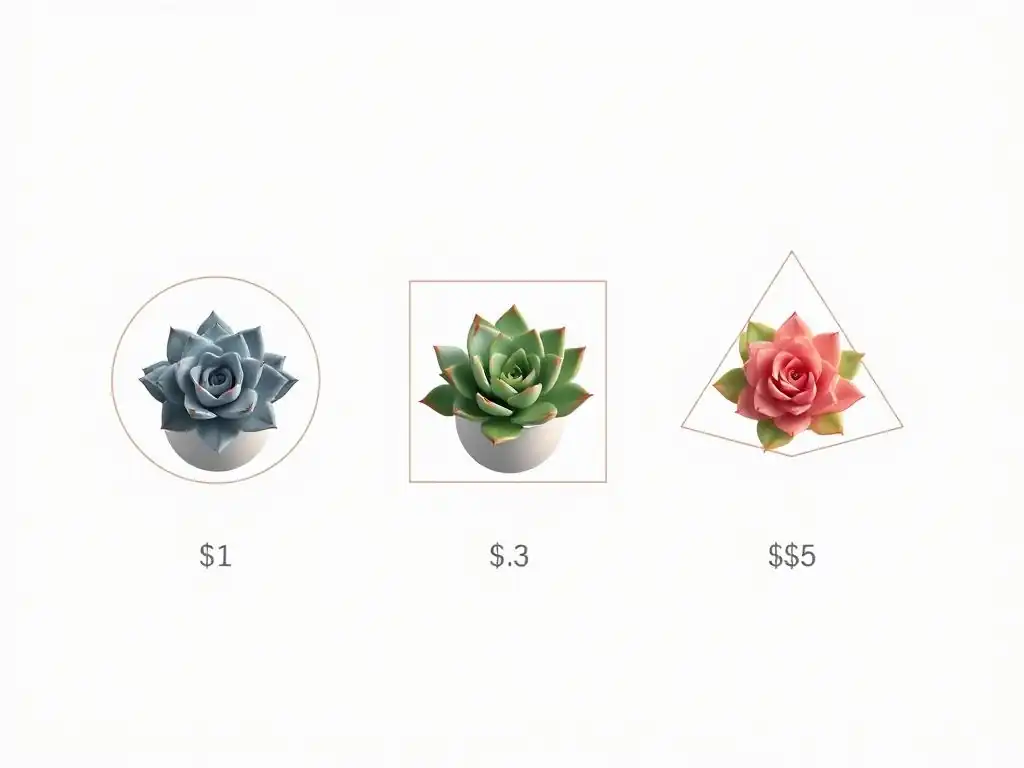
This section showcases real-world examples of how different succulent enthusiasts have successfully priced their digital products, highlighting the strategies they employed and the results they achieved. Analyzing these case studies will provide valuable insights into effective pricing for your own digital succulent offerings. Remember, the optimal price point is a balance between profitability and market demand.
Successful Etsy Seller Case Study
Let's examine the pricing strategy of "SucculentSecrets," a highly successful Etsy seller specializing in digital printable succulent artwork and patterns. SucculentSecrets initially offered their designs at a low price point ($3-$5 per design) to gain traction and build reviews. This aggressive initial pricing strategy helped them quickly establish a strong presence and positive customer feedback. Crucially, they strategically increased prices after accumulating a significant number of positive reviews and sales. Their current pricing is tiered; single designs are priced at $7-$10, while bundles of 5 or more designs are significantly discounted, encouraging larger purchases.
This approach demonstrates the power of a phased pricing strategy. Starting low allows for rapid market penetration, while gradually increasing prices reflects increased value and demand as their reputation grows. Their use of bundles also cleverly incentivizes customers to spend more, increasing their average order value (AOV). This strategy showcases that building trust and positive reviews initially can justify later price increases.
The key takeaway is the importance of adapting your pricing based on market response and business growth. Analyzing their sales data over time would reveal the precise correlation between price changes and sales volume, offering even deeper insights into optimal pricing. [Specific sales data pending].
Profitable Online Course Case Study
Another insightful case study involves "SucculentSchool," an online course teaching advanced succulent propagation techniques. Unlike the Etsy seller, SucculentSchool opted for a premium pricing strategy from the outset. Their comprehensive course, encompassing detailed video tutorials, downloadable resources, and access to a private online community, is priced at $197. This higher price point reflects the course's extensive content and the significant value it provides to students.
The success of SucculentSchool's premium pricing lies in their clear articulation of the course's value proposition. They highlight the time-saving benefits, the potential for increased income through successful propagation, and the exclusive access to a supportive community. They also offer a payment plan option to make the course more accessible to a wider audience, addressing potential financial barriers. This demonstrates that a high price point is viable if the value offered is clearly communicated and justified.
The significant investment in high-quality course materials also supports the premium pricing. [Specific student testimonials and enrollment figures pending]. Their strategy underscores the importance of showcasing the unique benefits and exclusivity of your digital product to justify a higher price. Offering a payment plan cleverly increases accessibility without compromising overall profitability.
Tools and Resources
This section delves into the essential tools and resources you'll need to effectively price your digital succulent products and ensure profitability. Accurate pricing requires a blend of understanding your costs, analyzing your market, and leveraging the right technology. Let's explore the key resources available.
Pricing Calculators and Software
Pricing your digital succulent products isn't just about throwing a number out there; it requires a strategic approach. Fortunately, several tools can assist in this process, streamlining calculations and providing data-driven insights. These tools often incorporate factors beyond simple cost-plus pricing, considering market competition, perceived value, and even customer segmentation.
Several different types of software can aid in this process. Some focus solely on calculating profit margins based on your production costs and desired profit percentage. Others offer more sophisticated features, integrating market research data to help you optimize your pricing strategy for maximum revenue generation. For example, you might use software that allows you to input your variable costs (e.g., ebook design, course platform fees) and fixed costs (e.g., website hosting, marketing expenses) to generate a range of potential prices, each with corresponding profit margins displayed.
Consider these key features when selecting pricing software:
- Cost Tracking: The ability to accurately track both fixed and variable costs is paramount. This ensures your calculations are grounded in reality.
- Profit Margin Analysis: The software should clearly show the profit margin at different price points, allowing you to experiment and find the sweet spot.
- Market Data Integration: Ideally, the software should integrate with market research tools (discussed below) to provide a holistic view of your pricing strategy within the competitive landscape.
- Scenario Planning: The capacity to model different pricing scenarios (e.g., discounts, bundles) is crucial for exploring various strategies.
- Reporting and Analytics: Robust reporting features will help you track your pricing performance over time and make data-driven adjustments.
Choosing the right pricing calculator or software is vital for establishing a sustainable and profitable pricing strategy for your digital succulent products. The complexity of the software you need will depend on the scale of your business and the level of detail you require in your analysis. Simple spreadsheets can suffice for smaller operations, while more sophisticated software might be necessary for larger businesses with multiple product lines.
Market Research Tools
Understanding your target market is crucial for effectively pricing your digital succulent products. Market research tools provide invaluable insights into consumer behavior, competitor pricing, and overall market demand. This information allows you to position your products strategically and avoid underselling or overpricing.
Several tools can assist in this research. Some free tools might provide basic data on keyword search volume and competitor analysis, while others offer more comprehensive features at a cost. Paid options often provide more in-depth analysis and data visualization tools.
Here's a breakdown of the types of data you can gather using these tools:
- Competitor Analysis: Identify your competitors, analyze their pricing strategies, and understand their strengths and weaknesses. This helps you position your products effectively.
- Keyword Research: Understanding which keywords your target audience is using allows you to tailor your product descriptions and marketing efforts to reach the right customers.
- Customer Segmentation: Identifying different customer segments (e.g., beginner succulent enthusiasts vs. experienced collectors) allows you to tailor your pricing strategy to each group's willingness to pay.
- Demand Forecasting: Predicting future demand for your products helps you set prices that optimize revenue generation.
By utilizing market research tools, you'll gain a deeper understanding of the market landscape, enabling you to price your digital succulent products strategically and maximize your profits. Remember, effective pricing is an iterative process; regular market monitoring and adjustments are key to long-term success. Don't be afraid to experiment and refine your pricing strategy based on the data you gather. The right tools will empower you to make data-driven decisions, leading to better pricing and increased profitability.
Frequently Asked Questions
How do I determine the price of my digital succulent products?
Consider the time and effort invested in creating your product, the quality of your images or designs, and the value you offer to your customers. Research competitor pricing for similar digital products to help you set a competitive yet profitable price.
What factors influence the price of digital succulent products?
Several factors affect pricing, including product complexity, file formats offered, license type (personal use vs. commercial), and the target audience's perceived value. Higher quality and more versatile products can command higher prices.
Can I offer different pricing tiers for my digital succulent products?
Yes, absolutely! Offering multiple pricing tiers with varying features or usage rights (e.g., basic vs. extended license) can cater to a wider customer base and maximize your profits. Consider offering bundles at a discounted price.
Where can I sell my digital succulent products?
Many platforms are suitable for selling digital products, including Etsy, Creative Market, your own website, and various online marketplaces. Choose the platforms that best suit your target audience and business model.
How can I ensure my digital succulent products are priced competitively yet profitably?
Thorough market research is key. Analyze competitor pricing and identify your unique selling points to justify a premium price. Start with a competitive price and adjust based on sales data and customer feedback.
Final Reflection: The Enduring Bloom of Profitable Pricing
The art of pricing digital succulent products isn't just about maximizing immediate revenue; it's about cultivating a sustainable business that thrives. Finding the sweet spot between value and affordability is crucial in today's competitive digital marketplace, and understanding this balance is key to long-term success. Ignoring this fundamental aspect can lead to missed opportunities and ultimately, the wilting of your business.
The impact of strategic pricing extends far beyond the immediate transaction. It shapes brand perception, customer loyalty, and overall market positioning. It's about more than just numbers; it's about building a community around your creations. As the saying goes, Price is what you pay. Value is what you get.
This simple truth underscores the importance of aligning your pricing with the perceived value your digital succulents offer – their aesthetic appeal, their ease of use, and the unique experience they provide. This understanding has profoundly shaped my own approach to pricing, leading to a more considered and ultimately more successful business model.
Now, it's your turn. Consider the unique value proposition of your digital succulent products. Don't just focus on the cost of creation; delve deeper into the experience you offer your customers. Experiment with different pricing strategies, analyze the results, and adapt your approach to find the perfect balance that nurtures both your business and your customer relationships. The journey to profitable pricing is an ongoing process of learning and refinement – a journey that, with careful cultivation, will yield abundant and lasting rewards.
Unlock Your Succulent Empire: Price for Profit!
Thank you for exploring the world of profitable digital succulent pricing! You now possess the knowledge to transform your passion into a thriving business. Ready to take the next step?
Here's how to succeed:
- Implement your new pricing strategy today: Review your current prices, applying the discussed methods, and make necessary adjustments. This crucial step will maximize your profits.
- Track your results and adapt: Monitor sales and customer feedback over the next month to identify what works best. Make small, iterative adjustments—pricing is an ongoing process of refinement.
- Share your successes (and challenges!): We'd love to hear about your experience. Join our thriving community forum and share your insights with fellow succulent entrepreneurs.
What pricing strategy will you implement first to boost your succulent business?