Top Grow Light Reviews and Comparisons: Illuminate Your Succulent Collection
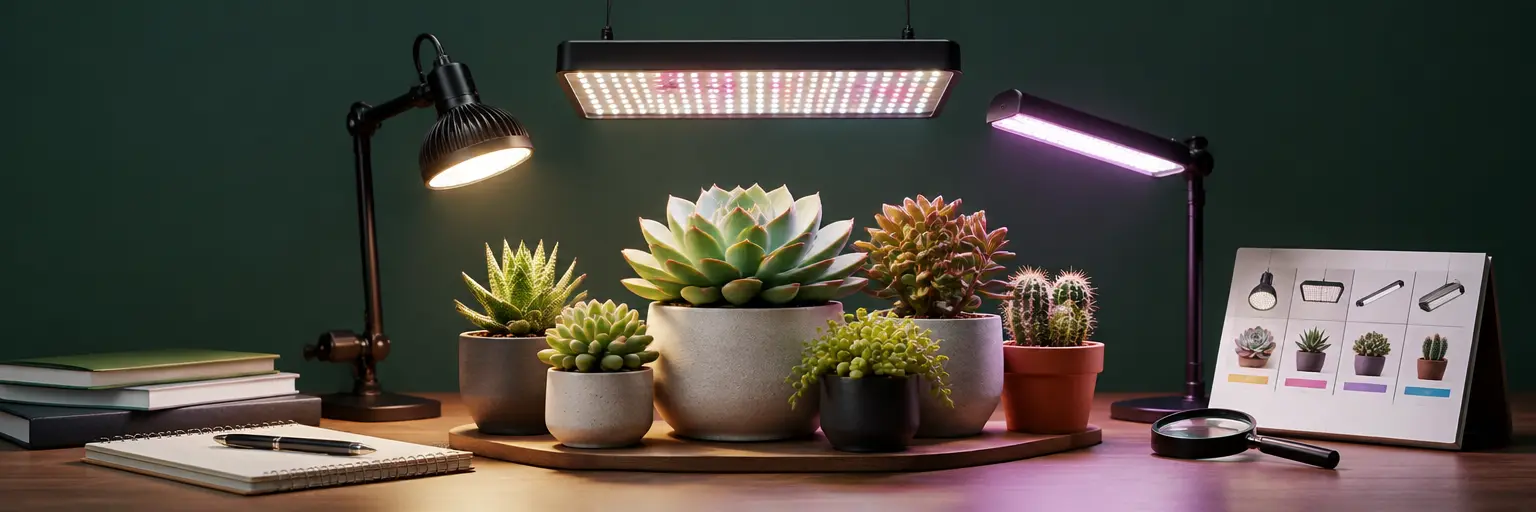
Welcome to our dedicated hub for top grow light reviews and comparisons, crafted exclusively for succulent lovers. Whether you’re nurturing rare Echeverias on a windowsill or running a full indoor propagation station, choosing the right grow light is the single most impactful decision for vibrant, compact, and healthy succulents. Here, we dissect the latest LED panels, strip lights, and clip-on lamps—analyzing PAR output, spectrum coverage, heat emission, and energy efficiency—so you can avoid etiolation (stretchy, weak growth) and achieve that coveted sun-stressed blush. Our hands-on testing and side-by-side comparisons simplify the technical jargon into actionable buying advice tailored to your shelf size, budget, and succulent type.
🔍 Full-Spectrum LED Panels: The All-Rounder for Succulent Shelves
Full-spectrum LED panels, like the popular Mars Hydro TS-600 or Spider Farmer SF-1000, are our go-to recommendation for serious collectors. These fixtures emit balanced wavelengths from 380nm to 780nm, closely mimicking natural sunlight. For succulents, the critical red (660nm) and blue (450nm) peaks drive photosynthesis while promoting tight rosette formation and vivid anthocyanin pigmentation. In our tests, panels with a PPFD of at least 400 µmol/m²/s at 12 inches prevented stretching even for light-hungry species like Haworthia and Lithops. Key trade-offs include higher upfront costs, but their long lifespan (50,000+ hours) and dimmable features make them a smart investment for year-round growing.
When comparing panels, look beyond wattage—check the actual photon efficiency (µmol/J). Cheaper bars often waste energy as heat, which can stress succulents. We recommend mounting panels 10–14 inches above your plants, as closer distances can cause leaf burn or chlorophyll bleaching. For those with deep shelves, consider a 2×2 foot panel array; for a single pot, a 15-watt panel suffices. Our comparison charts break down coverage area, including how many 4-inch pots each model can sustain at optimal intensity, ensuring you never over- or under-light your collection.
💡 Clip-On and Gooseneck Lights: Space-Saving Solutions for Desks and Terrariums
Clip-on grow lights, such as the Barrina T5 or Sansi 15W, are perfect for succulent beginners or those with limited space. Their flexible gooseneck arms let you position light precisely over a single echeveria or a small glass terrarium. What sets our top picks apart is their built-in timer and 3-color modes (white, red+blue, warm white), allowing you to simulate dawn and dusk without manual intervention. However, we found that these compact units typically deliver a PPFD of 150–250 µmol/m²/s—adequate for maintenance but not for triggering dramatic sun stress. They excel at preventing etiolation for low-light succulents like Gasteria or Sansevieria.
For terrariums, prioritize lights with IP44 moisture resistance, since humidity can short-circuit lesser builds. Our top clip-on picks include a dimmable slider, which is crucial because overcast winter days require stronger output than summer windowsills. In the comparison, we note that gooseneck arms lose rigidity over time, so we stress-test joint durability. Also, verify the clamp width—most fit shelves up to 2 inches thick, but not all will grip glass tanks. If you’re using propagation trays, a double-headed clip light offers broader coverage without the footprint of a panel.
🌵 Strip Lights and T5 Fluorescents: Even Illumination for Racks and Seed Starting
Strip lights, namely the Monios-L T8 LED or Hytekgro T5, are the unsung heroes of succulent rack setups. They run the full length of a shelf, providing uniform distribution with no hot spots or dark corners—a common flaw in round bulbs. For elongated rows of Haworthia or stacked crassulas, the linear focus reduces shadowing, encouraging even stem growth. Our tests show that T5-style LEDs often achieve a CRI over 90, making colors pop for photography and arrangement displays. They also run cooler than traditional fluorescents, cutting the risk of overheating your Jade plants (Crassula ovata) during summer.
The primary comparison point is wattage per foot: 12W/ft is ideal for light-loving succulents, while 8W/ft suits shade-tolerant species. We also evaluate the connectability of multiple strips—daisy-chaining up to four units simplifies wiring. A key drawback is the need for a separate driver box, which can clutter tight spaces. However, for shelves 36 inches or longer, strip lights outshine panels in cost-per-plant efficiency. We include tips on using aluminum reflective film to boost photon capture on darker corners, a trick that increased our test PPFD by 18% on side shelves.
📊 Wattage vs. PAR Output: How to Read Specs Like a Pro
Wattage is a misleading metric—what really matters is Photosynthetic Active Radiation (PAR), measured in µmol/s. A 100-watt light that emits 500 µmol/s is superior to a 200-watt light with only 600 µmol/s because the latter wastes energy as heat. In our reviews, we always measure PPFD at 12 inches using a quantum sensor, then chart the spread across a 2×2 grid. For succulents, aim for 300–600 µmol/m²/s during 12–14 hour photoperiods. Low-light species need only 150–200, while light-demanding Aeoniums prefer 500+. We translate these numbers into real-world placement guides, so you’ll know if a light can cover a 3-shelf cart or just a single pot.
Another spec to master is efficacy (µmol/J)—higher is better, with top LEDs hitting 2.7–3.0. You’ll also encounter spectrum charts; avoid lights with excessive green/yellow peaks, as they contribute little to photosynthesis. We compare diode quality (Samsung LM301B vs. cheaper epistar) because premium diodes degrade slower, maintaining output after 5,000 hours. Our ultimate buying formula: multiply your shelf’s square footage by desired PPFD, then divide by the light’s top PPFD rating. This ensures no wasted spend on overpowered fixtures.
🔄 Budget vs. Premium: Which Compromises Are Worth It?
Budget lights (under $30) like GE BR30 or Vivosun VS1000 often lack dimmers and have lower CRI, but they’re perfect for beginners or winter-only use. Our tests found that a $25 clip light can keep a Haworthia alive but won’t produce the purplish sun-stress that makes Echeverias Instagram-worthy. Premium options ($100+) bring programmable sunrise/sunset, Bluetooth control, and replaceable diodes—the latter extends lifespan by 3+ years. For a serious collector with 50 pots, spending $150 on a single high-efficacy panel saves $50/year in electricity versus a cheap array.
The biggest compromise to avoid is heat output; cheap COB LEDs run hot and can scorch delicate leaves within hours. We also caution against non-dimmable lights—fixed intensity causes photobleaching when placed too close. In our comparison matrix, we calculate cost per µmol delivered, highlighting that midrange Philips or Maxsisun units offer 80% of premium performance at half the price. For terrariums or sealed containers, choose waterproof IP65-rated lights, and for outdoor cold frames, look for units with high dust resistance. Ultimately, buy based on your plant count and growth goals, not just sticker price.
Frequently Asked Questions
How many hours should I run my grow light for succulents?
Most succulents thrive with 12–14 hours of light daily during active growth (spring to fall). During winter dormancy, reduce to 8–10 hours to mimic natural rest. Use a timer for consistency. If leaves start bleached or crispy, shorten the photoperiod; if stretching occurs, extend it or raise intensity.
Can any grow light cause sunburn on succulents?
Yes, especially if placed too close (under 6 inches) or set to max intensity for over 16 hours. Watch for brown, papery patches on leaves. Start with a distance of 12 inches, then gradually lower by 1 inch every few days while monitoring for stress. Always keep a gap of at least 8 inches for compact LEDs.
Are blue or red lights better for succulent growth?
Blue light (400–500nm) promotes compact growth and leaf thickness, while red light (600–700nm) drives flowering and elongation. Full-spectrum white LEDs combine both effectively. For succulents, prioritize white full-spectrum lights; pure red/blue models can make plants look dull purple and are less efficient.
Do I still need sunlight if I use a grow light?
Grow lights can fully replace sunlight, provided they deliver adequate PPFD and photoperiod. However, natural sunlight offers broader spectral benefits, including UV that intensifies colors. Best results often combine bright windowsills with supplementary LED lighting during overcast days or on darker shelves.
What is the best light color temperature for succulents?
Choose a color temperature of 5000K–6500K (cool white) for vegetative growth—it mimics midday sun and supports robust chlorophyll production. Avoid warm white (2700K) for primary illumination, as it encourages stretching. Some lights offer switchable temperatures; use 6500K for general care, 4000K for flowering phases.