Discover the Enchanting World of Miniature Landscapes and Fairy Gardens
Welcome to Miniature Landscapes and Fairy Gardens, a whimsical subcategory within Succulent Arrangements and Creative Displays at SucculentEssentials.org. Here, we blend the drought-resistant charm of succulents with the magical allure of tiny worlds. Whether you're a seasoned collector or a curious beginner, this space is dedicated to helping you craft living scenes that spark joy and imagination. From selecting the perfect miniature succulents to designing fairy-sized pathways, you’ll find actionable tips, creative inspiration, and maintenance advice—all tailored to thrive in any environment. Explore how to transform simple pots into storybook settings that captivate both children and adults alike.
🌸 Choosing the Right Succulents for Miniature Gardens
Selecting the ideal succulents is the foundation of any successful miniature landscape. For fairy gardens, you’ll want slow-growing, small-leaved varieties like Haworthia, Sedum, Sempervivum, and Echeveria—these mimic trees and shrubs at a tiny scale. Their compact rosettes and trailing habits create natural focal points without overwhelming the scene. Avoid fast-growing species like some Aloe types, which can quickly outgrow your miniature world and require frequent pruning. Also, consider color contrast: mix blues, purples, and greens to add depth, and use tiny stones or driftwood to break up foliage for a realistic landscape feel.
Beyond aesthetics, think about light and water needs. Most miniature succulents prefer bright, indirect sunlight and well-draining soil—a mix of cactus soil and perlite works perfectly. In a fairy garden, grouping succulents with similar needs ensures even growth and reduces stress. You can also use shallow containers, like bonsai pots or vintage trays, to keep roots cozy and limit sprawling. For beginners, start with a “thriller, filler, spiller” approach: one taller succulent as a focal point, a mounding type for texture, and a trailing variety like String of Pearls to cascade over edges. This simple formula guarantees a balanced, eye-catching display while minimizing maintenance.
🏡 Designing Your Fairy Garden Layout
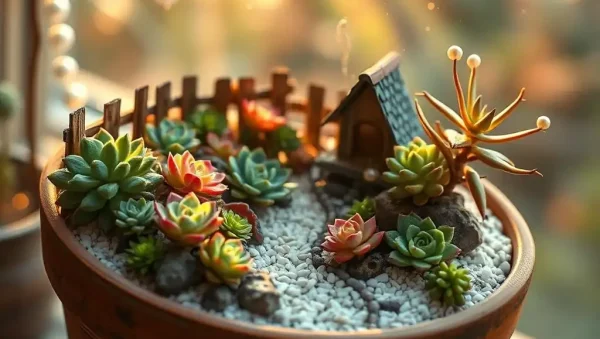
Designing a miniature landscape is like painting a tiny world—every element tells a story. Begin with a theme, such as a woodland cottage, a desert oasis, or a seaside retreat. Use natural materials like cork bark, slate chips, and sand to build hills, cliffs, and paths. Place larger succulents at the back or center as “trees,” and use smaller ones for foreground groundcover. Add tiny accessories—miniature fences, bridges, lanterns, and benches—to create scale and invite exploration. Remember, less is often more; avoid overcrowding so each succulent has room to breathe and your fairy residents feel at home.
Consider the container’s depth and drainage. Shallow trays work for dish gardens, but deeper pots allow for layering soil and adding hidden drainage reservoirs, which are great for outdoor displays. For indoor scenes, a glass terrarium with a removable lid can help maintain humidity, but beware of excess moisture—succulents hate soggy roots. To ensure long-term success, sketch your layout first, placing hardscape elements before planting. Use tweezers and chopsticks to position tiny plants precisely. After planting, top-dress with fine gravel or colored sand to unify the design and reduce weed growth. Your fairy garden should feel like a natural, miniature ecosystem, not a cluttered collection of objects.
🌿 Care and Maintenance for Miniature Displays
Maintaining a miniature succulent garden is simpler than full-sized gardens, but it requires a thoughtful routine. Watering is the biggest challenge—since pots are shallow and soil volume is small, they dry out faster. Use a spray bottle or a small watering can with a narrow spout to target the soil, avoiding leaves to prevent rot. Water only when the top inch of soil is completely dry, which may be every 5–10 days depending on your climate. For outdoor gardens, protect from heavy rain by moving them under a patio cover or using a cloche. In winter, reduce watering significantly, as succulents enter dormancy and need less moisture.
Fertilizing isn’t necessary often, but a half-strength succulent fertilizer once in spring and again in midsummer can boost growth and color. Prune any leggy growth or dead leaves to keep the scene tidy, and repot every 2–3 years to refresh soil and prevent root-bound issues. Watch for pests like mealybugs or fungus gnats; treat with neem oil or insecticidal soap. Cleaning your miniature accessories periodically prevents dust buildup that dulls their charm. If you notice a succulent outgrowing its spot, simply replace it with a smaller cutting—this is a great opportunity to propagate and expand your collection. With minimal effort, your fairy garden will remain vibrant for years.
🎨 Creative Themes and DIY Accessories
Unleash your creativity by crafting custom accessories that make your fairy garden truly unique. Popular themes include enchanted forests, zen gardens, and medieval castles, each requiring different miniature props. For DIY enthusiasts, you can hand-paint tiny mushrooms from air-dry clay, build a miniature wooden ladder from twigs, or sew a tiny felt flag. Use natural elements like acorn caps as bowls, pinecone scales as stepping stones, and bark as fences. These handmade touches add authenticity and are perfect for kids’ projects or as thoughtful gifts. The only limit is your imagination—recycle bottle caps, beads, and broken jewelry to create whimsical decor.
Beyond static décor, consider adding functional elements like a tiny solar-powered light to illuminate paths at night or a shallow water dish (with pebbles for insects) to invite local wildlife. For seasonal flair, switch out accessories: tiny pumpkins in autumn, mini snowmen in winter, or pastel eggs in spring. Ensure all accessories are weather-resistant if placed outdoors—use waterproof paints and sealants. Additionally, you can create a “miniature landscape” on a larger scale, like a fairy garden along a garden wall or in an old wheelbarrow. This allows you to combine multiple succulent species with hardy perennials, making a dynamic display that changes with the seasons. The key is to balance visual interest with practical care, so your creation thrives and delights.
🪴 Troubleshooting Common Miniature Garden Issues
Even experienced gardeners face challenges with miniature succulent displays. One common issue is etiolation (stretching due to insufficient light). If your succulents become tall and pale, move them to a brighter windowsill or add a grow light. Another problem is root rot from overwatering—yellow, mushy leaves signal excess moisture. Remove affected plants, let the soil dry out completely, and improve drainage by adding perlite. Pests like aphids and spider mites may also appear; isolate new plants and treat with a gentle insecticidal spray. If your fairy garden accessories fade or crack, replace them with UV-resistant materials or move them indoors during extreme weather.
Sometimes, miniature gardens fail due to poor airflow, especially in closed terrariums. To fix this, leave the lid partially open or switch to an open container. Also, be mindful of soil compaction—stir the top layer occasionally to allow oxygen to reach roots. If you notice salt buildup (white crust) on soil or pots, flush with distilled water and reduce fertilizer frequency. For unattractive gaps after plants settle, add topdressing or new mini accessories. Remember that succulents are resilient; with patience and observation, you can revive most issues. Keeping a journal of your garden’s progress helps you understand its unique needs and prevents future problems. Your miniature landscape is a living art piece—enjoy the process of fine-tuning it.
Frequently Asked Questions
What succulents are best for fairy gardens?
Choose small, slow-growing varieties like Echeveria, Haworthia, Sedum, and Sempervivum. These have compact rosettes and trailing habits that mimic miniature trees and shrubs. Avoid fast growers like Aloe, which quickly outgrow the scene. Always match light and water needs for a harmonious display.
How often should I water a miniature succulent garden?
Water only when the top inch of soil is dry—typically every 5–10 days indoors and more often outdoors in summer. Use a spray bottle or narrow-spout can to target the soil, avoiding leaves. Reduce watering in winter when succulents are dormant.
Can fairy gardens survive outdoors in winter?
Most succulents are frost-tender and cannot survive freezing temperatures. Move outdoor fairy gardens indoors or into a greenhouse before frost. Alternatively, use cold-hardy succulents like Sempervivum and provide excellent drainage and shelter from excessive rain to protect them.
How do I prevent root rot in shallow containers?
Ensure your container has drainage holes and use a gritty soil mix with perlite or pumice. Water sparingly and allow the soil to dry completely between waterings. Avoid letting the pot sit in a saucer of water, and consider a layer of gravel at the bottom for extra drainage.
Can I mix regular plants with succulents in a fairy garden?
Yes, but choose plants with similar low-water needs, such as certain small ferns, mosses, or air plants (Tillandsia). Avoid thirsty annuals or tropicals that require constant moisture. Keep succulents as the main focus and use accent plants sparingly to maintain balance and simplify care.