Soil and Fertilizers Buying Guide for High-Value Succulents
Welcome to the definitive Soil and Fertilizers Buying Guide at SucculentEssentials.org. When investing in high-value succulents, the right growing medium and feeding schedule are the difference between a thriving collector’s piece and a declining plant. This guide breaks down every essential factor—from drainage and particle size to organic vs. inorganic mixes and slow-release nutrients—so you can make confident, informed purchases. Whether you are a seasoned enthusiast or a curious hobbyist, this subcategory will help you master the foundation of succulent health.
🌱 Understanding the Ideal Soil Structure for High-Value Succulents
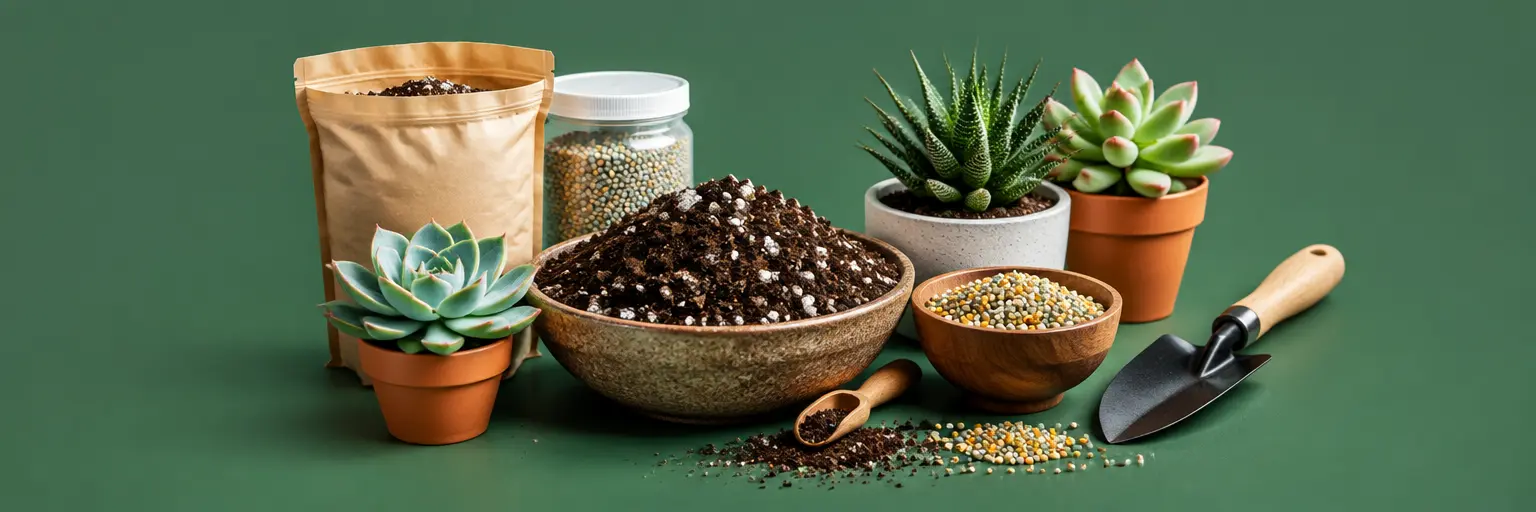
High-value succulents like rare Haworthias, Ariocarpus, or variegated Echeverias demand a soil mix that mimics their native arid habitats. The key is macropores—large air pockets that allow rapid water drainage and oxygen flow to delicate root systems. A quality succulent soil should contain between 50% and 70% inorganic materials such as pumice, perlite, coarse sand, or crushed granite, with the remainder being a high-quality organic compost or coconut coir. This balance prevents waterlogging, which is the leading cause of root rot in expensive specimens.
When buying pre-made mixes, always check the particle size distribution. Uniform 1/8-inch to 1/4-inch particles provide stability and prevent fine dust from clogging pores. Avoid mixes with excessive peat moss, which retains moisture and can suffocate roots. For high-value plants, many collectors opt to build custom blends, but a reputable commercial mix specifically labeled "gritty" or "succulent" with clear inorganic content is a safe, convenient starting point. Look for brands like Bonsai Jack or Superfly Bonsai for premium options.
🧪 Evaluating Commercial vs. DIY Soil Mixes for Cost-Effective Care
Commercial succulent soils save time and ensure consistency, but they often sacrifice ingredient quality for mass production. Many budget-friendly options contain too much organic matter, leading to compaction and moisture retention. For high-value succulents, a DIY mix gives you total control over drainage, pH, and mineral content. A proven recipe is 1 part pumice, 1 part coarse sand, 1 part turface, and 1 part pine bark fines—creating a gritty, quick-drying medium that supports vigorous root growth.
However, DIY mixing requires sourcing high-purity ingredients and testing your ratios. If you prefer commercial options, choose brands that disclose their ingredient percentages and are tailored for rare and slow-growing succulents. Expect to pay $15 to $30 for a 2-gallon bag of premium mix. Compare this to DIY costs of roughly $8 to $12 per batch, considering bulk purchases. For small collections, commercial mixes are cost-effective; for large collections or propagation projects, DIY is superior in both price and performance.
🌿 The Role of Fertilizers in Enhancing Growth and Coloration
Succulents are not heavy feeders, but high-value specimens benefit from targeted fertilization to boost vigor, root development, and stress-induced colors. Nitrogen should be kept low (N-P-K ratios like 2-7-7 or 3-1-2) to prevent etiolation and overly lush growth that weakens stems. Look for fertilizers formulated for cacti and succulents, either liquid or water-soluble, with micronutrients like iron and magnesium that enhance leaf vibrancy and tolerance to bright light.
For high-value plants, mineral-based fertilizers such as Kelpmax (seaweed extract) and Dynasty Pro (a kelp-based nutrient) provide organic growth hormones and trace minerals without burning roots. Fertilize only during active growth seasons—typically spring and autumn—at half the recommended strength, every four to six weeks. Avoid fertilizing dormant plants in summer heat or winter cold. Overfeeding can cause salt accumulation in the soil, leading to root burn. Always flush the soil with clear water once every two months to leach excess salts.
🛠️ Choosing the Right Fertilizer Form: Slow-Release vs. Liquid vs. Granular
Slow-release fertilizers are ideal for busy succulent owners because they provide a steady nutrient supply over months. Pelletized formulations, like Osmocote Plus, release nutrients when soil moisture and temperatures are optimal, reducing the risk of burning. However, they can linger longer than the growth season, so use them sparingly—about half the recommended dosage for high-value plants. Granular fertilizers, applied to the soil surface, are easy to control but require immediate watering to incorporate.
Liquid fertilizers, such as a diluted 2-7-7 blend, offer immediate absorption and precise dosing, perfect for biweekly feeding during spring. They are excellent for diagnosing nutrient deficiencies—e.g., yellowing lower leaves indicate nitrogen deficiency, while pale new growth suggests iron insufficiency. For carnivorous or particularly sensitive species like certain Lithops, use liquid fertilizer at quarter strength. Regardless of format, always apply fertilizer to moist soil, never dry, to prevent root shock.
⚖️ Matching Soil and Fertilizer to Specific High-Value Succulent Types
No universal mix works for every succulent. Caespitose (clustering) species like Haworthia truncata require higher organic content (around 30%) to support their shallow, fibrous roots. In contrast, caudiciforms such as Adenium need even more grit and less water retention, with up to 80% inorganic material. Mesembryanthemums (Conophytum, Lithops) prefer a nearly mineral-based mix with zero organic matter to prevent overwatering during their summer dormancy.
When buying soil, check the label for suitability to specific genera. For example, “Artenara” mixes are specifically blended for Mesembs, while “Cactus Jack” suits most Echeverias. Fertilizer needs also vary: slow-growing species like Ariocarpus require virtually no feeding, while fast-growing Echeveria and Sedum respond well to a balanced 5-10-5 fertilizer diluted to half. Always research your plant’s natural habitat to match soil composition—if it grows in limestone, add dolomitic lime to your mix.
🧰 Key Ingredients to Look For and Avoid in Soil Brands
When purchasing any commercial soil, scrutinize the ingredient list. Beneficial ingredients include pumice (lightweight and porous), perlite (enhances aeration but floats to the surface), calcined clay (turface) for moisture retention, and fir bark fines for organic nutrition. Avoid materials like pure vermiculite, which holds too much water, and any mix containing synthetic wetting agents or glued particles. Also, steer clear of any soil with peat moss as the first ingredient, as this indicates a moisture-retentive mix unsuitable for succulents.
Additionally, check for the presence of dolomite or gypsum which buffer pH to a slightly acidic 6.0-6.5 range. Many premium brands add mycorrhizal inoculants—beneficial fungi that enhance nutrient uptake, especially for phosphorus. This is particularly advantageous for high-value species grown in partially sterilized mixes. If the soil contains compost, ensure it is fully decomposed to avoid ammonia release. When in doubt, start with a small bag and test the mix by watering it through a pot—if water pools on top, the drainage is inadequate.
Frequently Asked Questions
What is the best soil mix for high-value succulents?
The best mix is a gritty blend of 60-70% inorganic particles (pumice, perlite, coarse sand) and 30-40% organic matter (compost or coco coir). This ensures rapid drainage and aeration. For rare species like Lithops, increase inorganic content to 80-90%. Always ensure particle sizes range from 1/8 to 1/4 inch to prevent compaction.
How often should I fertilize my expensive succulents?
Fertilize only during active growth periods—spring and early autumn—once every 4 to 6 weeks. Use a dilute liquid fertilizer at half strength. In summer and winter dormancy, pause feeding entirely. Over-fertilization can cause salt buildup and etiolation, so less is often more for high-value collections.
Can I use regular potting soil for succulents if I add more sand?
No, regular potting soil is too moisture-retentive even with added sand, as peat holds water. It often contains perlite and bark, but the fine organic matter clogs pores. Instead, use a dedicated succulent mix or build a gritty blend from pumice, turface, and bark. The texture matters more than simple sand amendments.
What NPK ratio is ideal for maintaining vibrant succulent colors?
Use a low-nitrogen fertilizer like 2-7-7 or 3-1-2. High nitrogen promotes soft, green growth that fades color. Phosphorus and potassium support root health and stress pigments like reds and purples. Look for formulations with added magnesium and iron to enhance leaf hues under bright light.
Should I water right after applying granular fertilizer?
Yes, water thoroughly after applying granular fertilizer to help dissolve the nutrients and carry them into the root zone. However, ensure the soil is already slightly moist to avoid shocking roots. For slow-release pellets, water lightly after application to activate, then resume regular watering schedules.