Succulent Light Duration: How Long Should You Provide Artificial Light?
🤔 Discover the ideal light schedule for thriving succulents! SucculentEssentials.org reveals how long artificial light is needed, helping you choose the best…
Read article
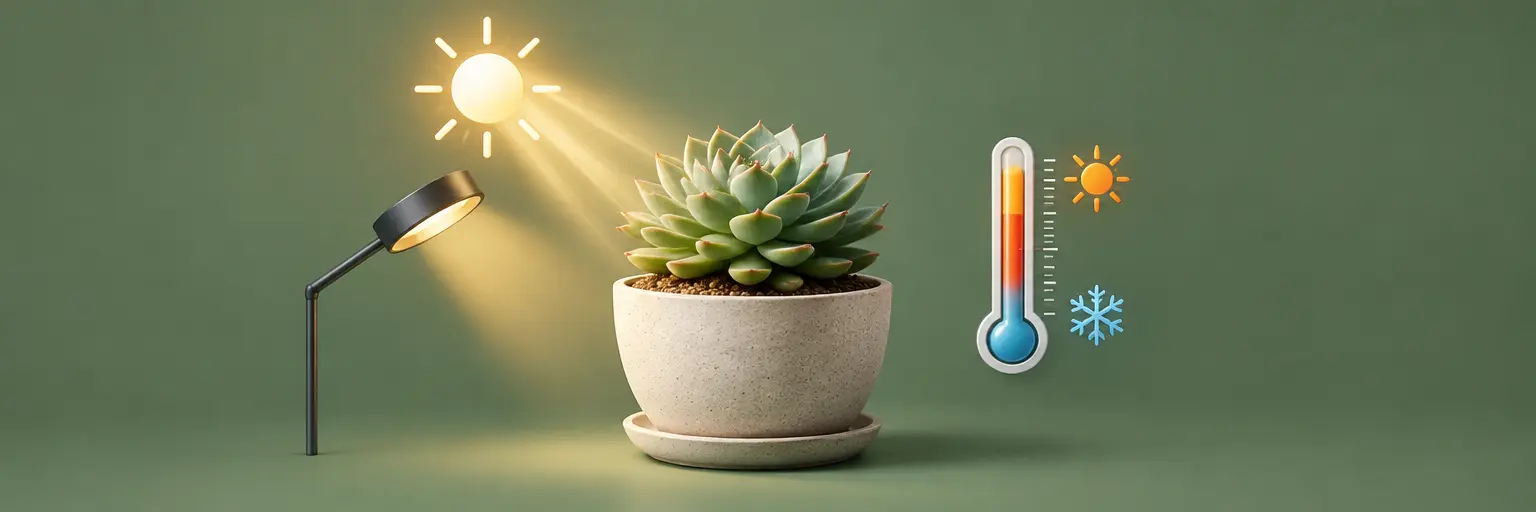
Getting light and temperature right is the golden rule for thriving succulents, and it’s simpler than you think. These hardy plants crave bright, indirect sunlight for at least six hours daily—think a south or east-facing windowsill—to prevent etiolation and keep their colors vibrant. Too much intense afternoon heat can scorch leaves, while insufficient light leads to stretched, pale growth. 🌞 Equally crucial is temperature: most succulents prefer daytime temps between 70–85°F (21–29°C) and cooler nights around 50–55°F (10–13°C) to mimic their natural desert rhythm. ❄️ Protect them from frost and freezing drafts, as cold damage turns leaves mushy, while prolonged heat above 90°F can trigger dormancy. 🛡️ By mastering these light exposure and thermal baselines, you’ll unlock robust roots, compact rosettes, and stress colors like blushing pinks or deep purples. Whether you’re a beginner or a seasoned grower, adjusting these two variables—seasonally and by species—is your ultimate toolkit for resilient, sculptural succulents in any home or garden. 🌵✨
🤔 Discover the ideal light schedule for thriving succulents! SucculentEssentials.org reveals how long artificial light is needed, helping you choose the best…
Read article
😊 Discover the best succulent night temperatures for optimal growth! Cooler evenings are crucial for healthy succulents; learn why and how to…
Read article
🤔 Discover the surprising cold hardiness tolerance of your succulents! SucculentEssentials.org reveals the crucial temperature thresholds to protect your beloved plants from…
Read article
🤔Unlock your succulents' full potential! SucculentEssentials.org's expert guide reveals the best succulent light and temperature conditions for vibrant growth, ensuring your plants…
Read articleUnderstanding the delicate balance of light and temperature is the cornerstone of successful succulent care. At SucculentEssentials.org, we know that getting these two factors right can mean the difference between a vibrant, colorful collection and a stretched, etiolated one. This subcategory dives deep into how succulents interact with their environment, helping you replicate their native desert and alpine conditions—even indoors. From spotting the first signs of sunburn to preventing winter rot, you’ll learn actionable techniques to keep your plants robust year-round.
Succulents are often labeled “full sun” plants, but that’s a simplification. Most species crave bright, indirect light for 4–6 hours daily, while others—like Echeveria and Sedum—thrive in direct morning sun but scorch under harsh afternoon rays. This section teaches you how to assess your window orientation, use sheer curtains to diffuse intense light, and rotate pots weekly to ensure even growth. We also cover the telltale signs of too little light: stretching (etiolation), pale foliage, and a leaning stem.
Conversely, too much light triggers sunburn, visible as bleached, brown, or crispy patches. Learn to harden off newly purchased plants by gradually increasing light exposure over 7–10 days. For outdoor growers, we discuss seasonal shifts—how the angle of the sun changes in winter and summer—so you can reposition your pots for optimal luminosity without guesswork.
Most succulents are hardy between 60°F and 80°F (15°C–27°C), but temperature swings matter more than a static number. Many species require a 10–15°F drop at night to trigger healthy respiration and vibrant stress colors. This section breaks down temperature preferences for common genera—Agave loves heat, while Sempervivum tolerates frost. You’ll also discover how to use thermometers and smart sensors to monitor your microclimate, especially near drafty windows or heating vents.
We explore the concept of dormancy: winter growers (like Lithops) prefer cooler temps (50°F–60°F) and dry soil, while summer growers (like Euphorbia) need warmth. Failing to mimic these cycles can lead to root rot or stunted growth. Our practical advice includes using thermal curtains, placement on shelves away from cold glass, and leveraging heat mats for winter propagation—all tailored to your local climate zone.
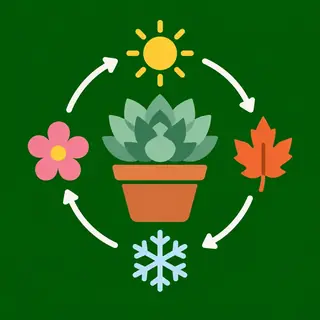
Succulents don’t follow a fixed calendar; they respond to photoperiod and temperature cues. As days shorten in autumn, you should reduce watering and move plants to brighter spots to compensate for weaker sunlight. In winter, many species enter a semi-dormant state, requiring minimal water and cooler nights (down to 40°F for hardy types). This section provides a month-by-month checklist so you never miss a critical adjustment, from relocating indoor pots to insulating outdoor beds.
Summer heat brings its own challenges: temperatures above 90°F can stress plants, causing leaves to shrivel or drop. We teach you how to create afternoon shade using shade cloth (40–60%) or by placing taller plants as natural sunblocks. Also, learn to recognize heat dormancy in species like Aeonium, which pause growth in July and August—and why you should never fertilize during that time.
Not every home has a south-facing window. Full-spectrum LED grow lights are a game-changer, providing the exact PAR (photosynthetically active radiation) succulents need. This section explains wattage, color temperature (6500K for veg growth, 2700K for flowering), and the crucial 12–16 hour daily timer setting. We compare affordable strip lights versus high-intensity panels, plus proper distance—typically 6–12 inches above leaves—to prevent leaf burn.
You’ll also learn about supplemental lighting for winter: even sun-facing windows may only deliver 20% of summer intensity. We recommend using a lux meter to measure actual light levels (aim for 2,000–5,000 lux for most succulents). For rare, high-light species like Titanopsis, we suggest pairing a 10W grow bulb per square foot. By mastering artificial light, you can grow succulents in basements, offices, or even windowless rooms—without sacrificing health.
Even experienced growers face plant damage from light and temperature mismanagement. Etiolation is the most common failure: stems elongate, leaves space out, and colors fade. We provide a rescue guide—slowly reintroducing light and pruning stretched tips for propagation. Thermal shock occurs when you move plants abruptly from indoors to full sun, causing cell damage; our “hardening off” protocol prevents this. You’ll also learn to diagnose cold stress, which manifests as mushy, translucent leaves or blackened stems.
Prevention is better than cure. We share strategies like using pebble trays to stabilize ambient humidity near heaters, avoiding watering during cold snaps (water roots become ice), and grouping plants with similar needs. Our problem-solving flowchart helps you differentiate between overwatering, sunburn, and temperature injury based on leaf texture and color—so you act fast and correct the underlying issue, not just the symptom.
Aim for a daytime range of 70°F–80°F (21°C–26°C) and a nighttime drop to 55°F–65°F (12°C–18°C). This mimics their natural habitat and promotes healthy metabolism. Avoid placing them near heaters, AC vents, or cold drafts, as sudden fluctuations cause shock. Using a digital thermometer near your plants helps you maintain consistency, which succulents appreciate far more than a specific number.
Minor sunburn leaves permanent white or brown scars, but the plant can recover if you move it to bright, indirect light immediately. Damaged leaves won’t heal, so prune them once new growth appears. Severely burned plants with mushy stems may be beyond saving—propagate healthy leaves instead. Prevent recurrence by slowly acclimating any plant to direct sun over two weeks, especially in spring.
Look for etiolation signs: stretched stems, widely spaced leaves, pale green color, and leaning toward the window. Also, if your plant’s rosette becomes flat instead of compact, it’s craving sunlight. Use your hand as a shadow test—if your hand casts a sharp shadow at noon, light is adequate; if not, supplement with a grow light or move to a brighter spot.
Yes, absolutely. Winter’s shorter days and lower sun angle reduce light intensity by up to 50%, even in south windows. A full-spectrum grow light running 12 hours daily prevents etiolation and keeps colors vibrant. Place it 8–12 inches above your succulents and adjust the duration based on your region’s daylight. This also lets you keep your collection active instead of forcing full dormancy.
Only cold-hardy species like Sempervivum, Sedum, and some Opuntia can survive frost down to -20°F (-29°C). Tender succulents (Echeveria, Crassula) die below 40°F (4°C). For non-hardy types, move pots indoors or into an unheated garage before the first frost. Use a frost blanket or mulch for ground-planted hardy species, and always ensure soil is dry before a freeze—wet roots amplify cold damage.