The Best Way to Water Succulents in a Shady Spot
🤔 Succulents in shade need less frequent watering than their sun-drenched cousins. Master the art of watering succulents in shade conditions at…
Read article
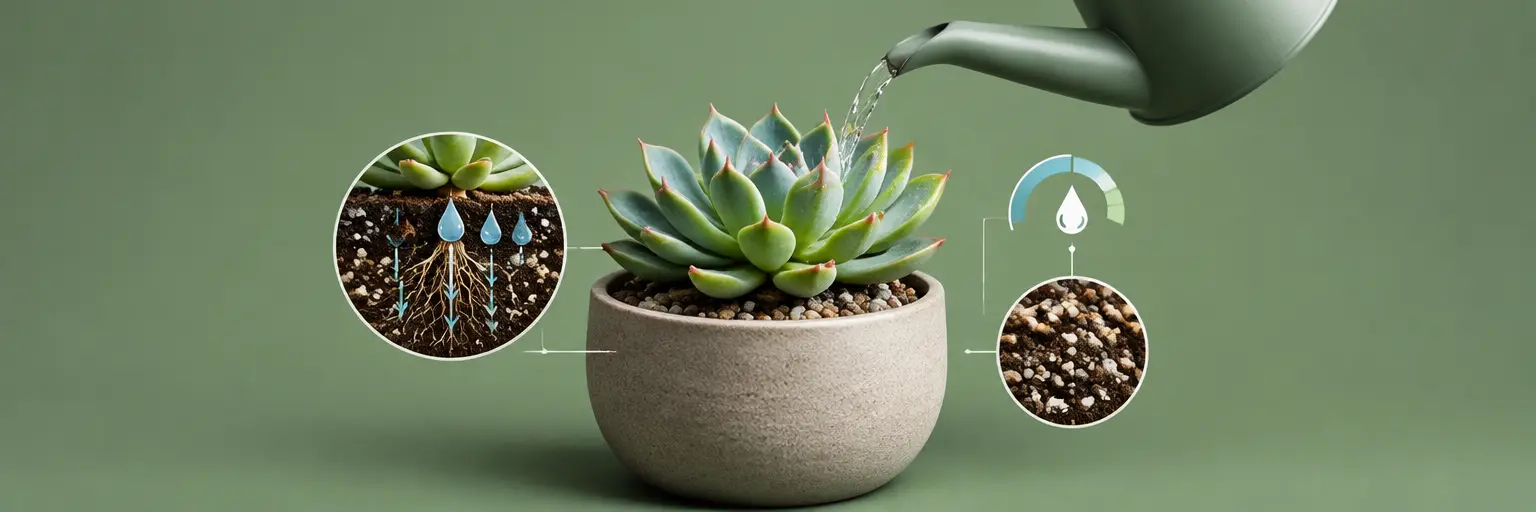
Mastering watering and moisture management is the heart of thriving succulents—overwatering is the #1 killer, but underwatering can stunt growth. Discover the right frequency, seasonal shifts, and soil moisture checks that keep roots healthy and leaves plump. From the soak-and-dry method to spotting early signs of root rot, we simplify the science so your drought-resistant plants flourish in any pot, climate, or season.
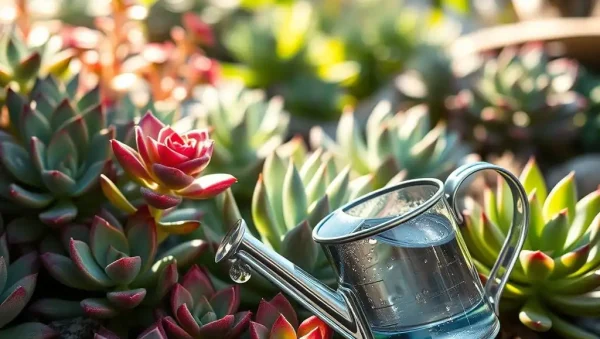
🤔 Succulents in shade need less frequent watering than their sun-drenched cousins. Master the art of watering succulents in shade conditions at…
Read article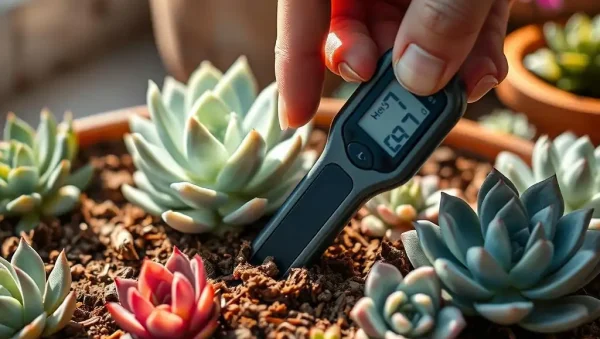
🤔 Master succulent watering with our expert guide! SucculentEssentials.org's "How to Use a Moisture Meter for Succulents" provides accurate watering insights, ensuring…
Read article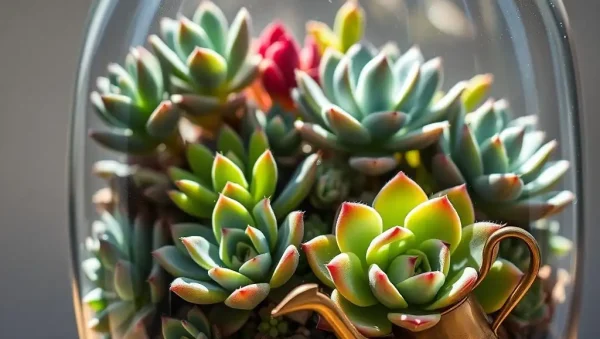
🤔 Master the art of terrarium succulent watering! SucculentEssentials.org's expert guide reveals the perfect balance for thriving plants, preventing overwatering and rot…
Read article
😊 Prevent succulent leaf water spots with SucculentEssentials.org's expert advice! Learn how proper watering techniques and ideal environmental conditions keep your succulents…
Read articleWatering is the most critical—and often the most misunderstood—aspect of succulent care. At SucculentEssentials.org, we break down the science and art of moisture management to help you avoid the common pitfalls of overwatering and underwatering. This subcategory provides actionable, environment-specific strategies to keep your drought-resistant plants plump, vibrant, and rot-free, whether you’re a beginner or a seasoned collector.
Succulents store water in their leaves, stems, or roots, making them uniquely adapted to arid conditions. Unlike typical houseplants, they follow a “soak and dry” cycle, meaning the soil must completely dry out between waterings. Key indicators of thirst include slightly wrinkled or softened leaves, a duller color, and leaves that feel less turgid to the touch. Overwatering, conversely, shows as mushy, translucent, or yellowing foliage—a sign of cellular damage from excess moisture. Learn to read these visual cues before reaching for the watering can.
Moisture management isn’t just about frequency; it’s about observing your plant’s seasonal rhythm. During active growth (spring and fall), succulents drink more, while in dormancy (summer heat or winter cold), they require minimal hydration. By mastering these signals, you’ll avoid the #1 killer of succulents: root rot from prolonged wetness. Actionable tip: keep a moisture log for each plant to track its unique response to your environment.
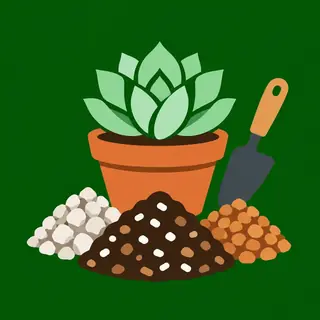
The foundation of moisture management starts below the surface. A well-draining succulent mix—typically 50-70% inorganic grit (perlite, pumice, coarse sand) blended with organic matter (coco coir or compost)—ensures water flows through quickly, preventing soggy roots. Commercial cactus mixes often retain too much moisture for indoor use, so amending them with extra perlite is a game-changer. Achieve the “flood test”: water should drain within 5-10 seconds, leaving no standing water in the saucer.
Your pot’s drainage holes are non-negotiable—terracotta pots are porous and wick away moisture, while glazed ceramics or plastic retain it longer, requiring less frequent watering. For beginners, a gritty mix with a high mineral content reduces the risk of overwatering, providing a forgiving buffer. Remember, the goal is to mimic a desert downpour: a thorough soak followed by rapid drying. This approach encourages deep root growth and resilience.
Succulents thrive on a dynamic watering rhythm that shifts with the seasons. In spring and autumn—their active growth phases—water every 7-14 days, depending on light and temperature, allowing soil to dry fully. During summer’s intense heat, some species enter a semi-dormant state and need less frequent, lighter watering every 2-3 weeks, especially at night to prevent scorching. Winter is the trickiest: with reduced light and cooler temperatures, most succulents require water only once a month or even less, just enough to prevent shriveling.
Humidity also plays a pivotal role. In humid climates, cut watering by 30-50% to compensate for slower evaporation, while in arid, desert-like conditions, you may need to water more often. Always check the soil moisture at a depth of 2-3 cm using a wooden skewer or moisture meter—if it comes out dry, it’s time to water. Adapting your schedule to local weather patterns, rather than a fixed calendar, is the secret to year-round succulent vitality.
Bottom watering—placing your succulent pot in a tray of water for 20-30 minutes—encourages roots to grow downward and prevents water from sitting on leaves or crowns, which can cause fungal issues. This method is ideal for plants with tight rosettes (e.g., Echeveria) that are prone to rot if water accumulates in their centers. Self-watering pots, conversely, use a reservoir to wick moisture upward, but they require rigorous monitoring to avoid over-saturation, making them better suited for experienced growers or fast-draining soil mixes.
For those seeking precision, consider a moisture meter with a long probe to gauge deep soil dryness, rather than relying solely on surface feel. Additionally, using a spray bottle for humidity-loving succulents (like lithops) can mimic morning dew without overwatering. Advanced hobbyists can implement a “drench and dry” cycle with a 1:1 dilution of hydrogen peroxide to oxygenate roots and prevent anaerobic bacteria, but always test on a single plant first. These techniques give you granular control over moisture levels.
Despite best efforts, moisture mishaps occur. Root rot manifests as black, mushy stems and a foul smell—immediate action involves removing affected roots, repotting in dry mix, and withholding water for 2-3 weeks. Edema, or corky brown spots on leaves, results from inconsistent watering (e.g., overwatering after a dry spell) and is mitigated by stabilizing your schedule. Etiolation, where succulents stretch and lose compact growth, often stems from underwatering plus low light; correct by increasing light gradually and adjusting watering.
Leaf drop or transparent leaves indicate severe overwatering—switch to a grittier substrate and improve airflow around the plant. On the flip side, shriveled, crispy leaves signal chronic underwatering; soak the entire pot in a basin for an hour, then drain thoroughly. Always quarantine affected plants to prevent pest spread of moisture-loving fungi. By diagnosing symptoms early and adjusting your watering practices, you can revive most succulents, turning moisture management into a confident skill.
Light intensity directly dictates how fast soil dries. Succulents in bright, direct sun (south-facing windows) will dry out within 3-5 days, requiring more frequent watering than those in indirect light, which may take 10-14 days. Temperature swings—like heat from nearby radiators or cold drafts from windows—also accelerate or slow evaporation, so adjust accordingly. Airflow is equally crucial: stagnant, humid air retains moisture around leaves, promoting mold, while a gentle fan simulates desert breezes, reducing watering frequency.
Seasonal changes in daylight hours shift your watering rhythm; using grow lights can compensate in winter, but remember they generate heat. Combining these environmental insights, create a microclimate: group pots on a pebble tray with water for humidity, but ensure leaves don’t touch the water. By optimizing these physical conditions, you naturally achieve balanced moisture, making your succulents more forgiving and resilient. This holistic approach is the hallmark of advanced succulent care.
Indoor succulents generally need water every 7-14 days during active growth, but this varies by light, pot size, and humidity. Check the soil up to 3 cm deep; if completely dry, water thoroughly until it drains. In winter, reduce to once a month. Never water on a fixed schedule without checking the soil first.
Yes, if caught early. Remove the plant from wet soil, trim any mushy roots, and let it air dry for 24-48 hours. Repot in fresh, gritty mix and avoid watering for 2-3 weeks. Provide bright, indirect light. If the stem is rotted, propagate healthy leaves or cuttings.
Use a minimal amount of water—just enough to moisten the top half of the soil—and water sparingly, only when leaves show thirst signs. Alternatively, use a layer of gravel at the bottom, but this doesn’t eliminate risk. For safety, repot into a container with drainage holes.
Misting is generally not recommended for most succulents, as it leaves water on leaves and crowns, inviting rot and fungal diseases. However, for very arid-adapted species like lithops, a light mist can mimic dew. Focus instead on deep, infrequent watering to saturate the root zone.
Signs of underwatering include wrinkled, deflated leaves that feel soft, a leaf surface that appears shriveled, and new growth that looks stunted. Water thoroughly by soaking the entire pot in a tray for 30 minutes, then let it drain completely. Recovery typically occurs within 48 hours.