Understanding Succulent Families: A Beginner’s Roadmap
Welcome to the fascinating world of succulent taxonomy! On this page, we break down the major plant families that make up the majority of succulents you’ll encounter. Knowing whether you’re caring for an Aizoaceae (like living stones) or a Crassulaceae (like jade plants) isn’t just botanical trivia—it directly influences watering, light, and soil needs. This guide is designed for hobbyists and collectors alike, helping you identify, categorize, and care for your plants with confidence.
🌵 The Big Four: Crassulaceae, Aizoaceae, Euphorbiaceae, and Cactaceae
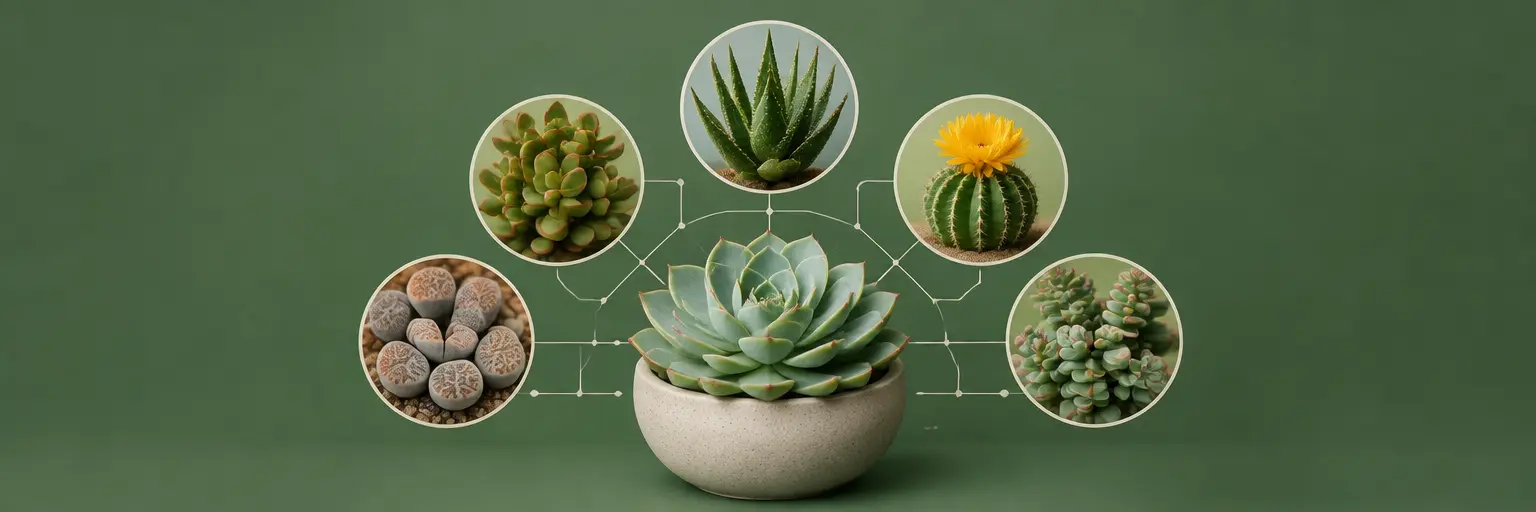
When most people think of succulents, they imagine cacti, but the succulent world is far broader. The Crassulaceae family includes popular genera like Echeveria, Sedum, and Sempervivum, known for rosette shapes and easy propagation. Aizoaceae (mesembs) are the “stone mimics,” including Lithops and Pleiospilos, which thrive on sparse watering. Euphorbiaceae offers striking, often spiny succulents like Euphorbia milii, while Cactaceae is the iconic family with areoles and glochids. Each family has unique growth habits, dormancy periods, and pest profiles—understanding these basics saves you from common care mistakes.
For example, Crassulaceae generally prefer well-draining soil and can tolerate occasional neglect, while Aizoaceae require a strict “soak and dry” cycle with complete dormancy in summer. Euphorbias are toxic if cut (sap irritates skin), whereas cacti are safe but need more sunlight. By learning which family your plant belongs to, you’ll instantly know its cold hardiness, flowering season, and whether it can survive indoors. This foundational knowledge makes every future purchase and repotting decision easier and more rewarding.
🔍 Identifying Succulent Families by Leaf and Stem Features
Leaf shape, surface texture, and stem structure are your best visual clues. Crassulaceae typically have fleshy, opposite or alternate leaves forming rosettes, often with a powdery farina (protective coating). Aizoaceae leaves are usually paired, fused, or windowed (translucent tips) to allow light into underground bodies. Euphorbiaceae often have ribbed, angular stems with small, deciduous leaves and paired spines. Cacti, in contrast, have areoles—small cushion-like structures from which spines and flowers emerge—which no other family possesses.
Also observe the stems: Euphorbias may leak white latex when cut, while cacti are dry and woody. Leaf texture matters too—some families have warty tubercles (like Haworthia in Asphodelaceae), others have hairy or fuzzy surfaces (e.g., many Echeverias). Use a magnifying glass to check for tiny hairs, scales, or waxy cuticles. Once you’ve noted these features, cross-reference with online databases or field guides to confirm. This skill is invaluable when buying unlabeled plants and helps you group species with similar care needs in your collection.
💧 Care Variations Across Succulent Families
Watering, soil, and light requirements differ dramatically between families. Cactaceae and Euphorbiaceae generally prefer gritty, mineral-based soil and intense, direct sun for at least 6 hours daily. Crassulaceae are more flexible, tolerating bright indoor light and a grittier mix but often need less direct afternoon sun in hot climates. Aizoaceae are the most drought-adapted: they need very infrequent watering (every few weeks in growth season) and soil that dries out completely within 24 hours.
Temperature also varies—some Crassulaceae (like Sempervivum) are frost-hardy, while most Euphorbias and cacti dislike temperatures below 10°C. Humidity matters as well: Aizoaceae prefer dry air, while many Crassulaceae appreciate moderate humidity if ventilation is good. Adjust your watering schedule by family, not by season alone. For instance, lithops are dormant in summer, while Echeveria grows actively. Learning these nuances prevents root rot, shriveling, and sunburn, and it makes your care routine more intuitive and effective.
🌿 Propagation Techniques by Family
Propagation success depends on family characteristics. Crassulaceae are famously easy—leaf cuttings root from a single leaf, and offsets appear readily. Cactaceae can be propagated from stem cuttings or seeds; pups (offsets) course through many species like Mammillaria. Euphorbiaceae need more caution: always let cuttings dry for a few days, and wear gloves to avoid toxic sap. Aizoaceae are more challenging—they rarely propagate from leaves and are best grown from seeds or division of clumping species like “Split Rock.”
Timing matters too. For Crassulaceae, spring to early summer is ideal for leaf cuttings, as they root faster in warmth. For cacti, take stem cuttings in late spring to early summer when the plant is actively growing. Euphorbias prefer a dry callus period—allow the cut end to form a hard crust for 5–7 days before planting in dry soil. Aizoaceae seeds are tiny; sow on the surface of gritty soil and keep moist until germination, then reduce water drastically. Family-specific propagation knowledge dramatically boosts your success rate and lets you expand your collection without cost.
🛒 Choosing the Right Succulent Family for Your Home
Your environment dictates which families will thrive. If you have bright, south-facing windows, cacti and Euphorbias are perfect choices. Low-light homes benefit from Asphodelaceae (like Haworthia and Gasteria), which tolerate lower light and are often mistaken for Aloe. If you want low-maintenance and forgetful-watering habits, go with Crassulaceae like Jades or Sedums—they forgive missed waterings. For small spaces, Aizoaceae like Lithops fit on tiny windowsills, but they require a strict watering schedule and enough light to avoid etiolation.
Consider also your climate: in humid or cold regions, avoid Aizoaceae and cold-sensitive Euphorbias indoors; instead, choose hardy Sempervivum or alpine Sedums. For beginners, we always recommend starting with Crassulaceae (Echeveria, Graptopetalum) or Haworthia—they’re forgiving, easy to propagate, and widely available. For collectors, branching into Aizoaceae or rare Euphorbias offers a fresh challenge. This family-based approach ensures you buy plants that match your lifestyle, reducing plant loss and frustration.
Frequently Asked Questions
What is the easiest succulent family for beginners?
The Crassulaceae family is the most beginner-friendly, including Echeveria, Sedum, and Jade plants. They tolerate irregular watering, root easily from leaf cuttings, and adapt well to indoor light. They only need well-draining soil and a bright spot, making them forgiving for new plant parents.
Do all succulents belong to the cactus family?
No. Cacti are only one family (Cactaceae). Succulents appear in over 60 botanical families, including Aizoaceae, Euphorbiaceae, Crassulaceae, and Asphodelaceae. Cacti are distinct due to their areoles and lack of leaves—most other succulents have fleshy leaves or stems.
How can I tell if my succulent is a Euphorbia or a Cactus?
Look for areoles—tiny, wooly cushions on cacti from which spines and flowers grow; Euphorbias lack areoles. Also, break a small stem: Euphorbias ooze white, milky latex (toxic), while cacti produce clear watery sap. Spine arrangement also differs—cacti often have radial spines around a central one.
Why do my Lithops (living stones) shrink and wrinkle?
Lithops wrinkle when they need water, but not always—they shrink naturally during dormancy. Check the soil: if completely dry and the plant feels soft, water it sparingly. If it’s in growth season (spring/autumn), water every 2–3 weeks; in summer/winter dormancy, don’t water at all to avoid rot.
Can I mix different succulent families in one pot?
Yes, but with caution. Group families with similar watering and light needs, like Crassulaceae with other Crassulaceae or Haworthia. Avoid mixing heavy drinkers (like some Echeveria) with extreme drought lovers (Aizoaceae), as one will suffer. Use a gritty soil mix and monitor moisture closely to prevent overwatering.